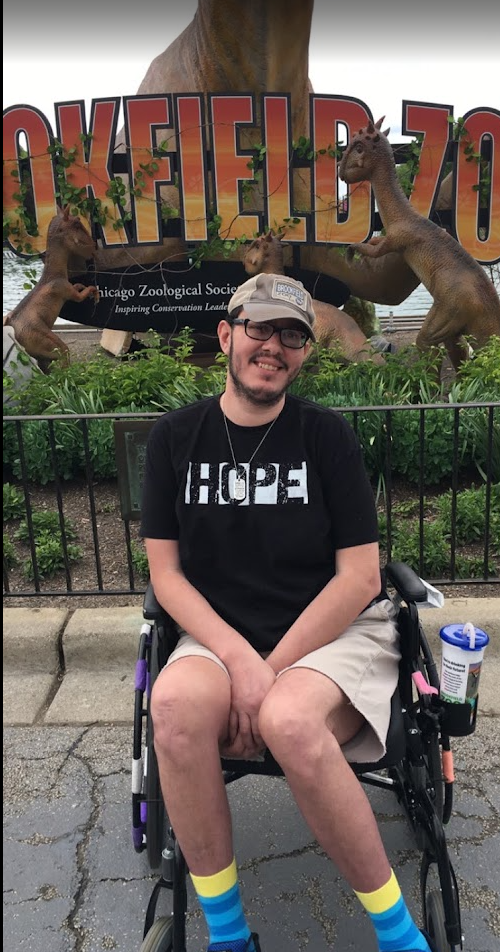
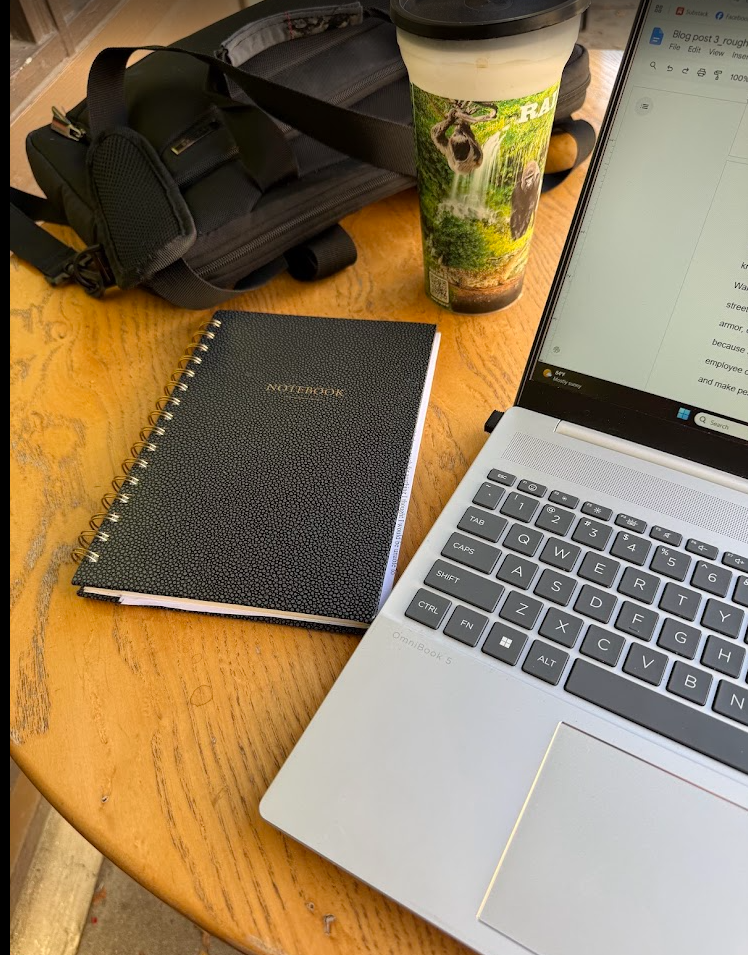
I strip off the jean jacket I wore to shield myself from the wind and find a table tucked away on the side of a cafe at Brookfield Zoo Chicago. A tree adorned in purple twinkle lights stands within my eye line. I've walked this space hundreds of times before in a different time as a college student needing some pocket money and something to put on my resume when I was handed my diploma and set out into the wild, so for five summers, I walked these zoo streets counting out the bank for each ticket vendor, holding a megaphone to advertise what tricks and treats we had in store for our guests that day, and even listening patiently to each and every little complaint from a guest who didn't get their way. I set up my computer, and suddenly it's the year 2000. Echoes of complaints make me crack up now, when they used to be such a big deal to me back then.
"You missed the dolphin show with the posted sign right out front with the hours in big bold letters that I shouted through a megaphone every hour on the hour? You poor thing." Chances are I apologized for the things outside my control. That used to bug me; now, it makes me laugh.
Today, I'm a guest using the zoo as my office for the day. No school. Warm day. A little breeze. Write inside my office or sip a Coke Zero in the autumn breeze? Autumn breeze, please. It'll be cold before you know it. I like to get out when I can.
Being a guest is much easier than holding the megaphone. I can't help but smirk at the head-thumping irony of my situation. Working as an aide for students with special needs and all that goes with that, like toileting, is much different when you're the one sitting on the toilet, no teacher persona, no Halloween costume to disguise the vulnerability inside.
During the years of initial treatment for CIDP, my nephew, then in 7th grade, would help hoist me into the car, and my brother would fold my wheelchair into his trunk. Mom and aunt sat in the backseat, and we'd head to the zoo. I wasn't strong enough to push my chair on my own, and my voice, so weak and diaphragmatic weakness so strong, I could only mutter front-of-mouth staccato consonant sounds; the sounds I was accustomed to hearing from my students unable to always form words. As a teacher, you encourage, you teach, you refer. You set goals for and with these students. You remember these are humans first, with special needs second. I close my eyes as I type this - how easy it is to pick up that megaphone and set goals for someone until it becomes you.
When speaking became nearly impossible, the first goal we set in speech therapy was front consonant sounds, then consonant-vowel-consonant sounds; things I do when I teach someone to read in language arts.
"Mmm, mmm, mmm" meant "mom."
My professional costume of assuredness was long gone as the world whisked by me - a blur of blues, oranges, greens, and even reds. I used Speech Assistant on my phone to communicate that I needed water, pain medication, to tell a joke that took too long to get out, and the moment passed me by -- to go to the bathroom.
I hated public bathrooms with my mom coming in to help me do the things I used to do as an aide for students with special needs.
"Can he understand me?" Passersby felt emboldened enough to ask my mom in the mall, the grocery store, and even the zoo, which should have been a safe place to not be gawked at.
"Yes. He's a teacher, you know."
Getting sick shouldn't require a "before" title, but I felt the pressure weighing on my shoulders to justify that I was something else, someone else who wore a different costume before that moment in rehab when my neurologist saw my fear and answered with a smile and a paraphrase from Stephen Hawking: "Where there's life, there's hope." The diagnostic process is a sea of grays and reds, and when I saw the words and the EMG report with scraggly lines in black and white, I had answers, but I never felt so naked. I didn't know how to grasp hope. I wanted it badly. Where is hope in the moment where "now" becomes "after?"
Writing these words at the zoo where I worked so long ago, I think of a family I worked for as a respite worker, taking the young man, nonverbal, in his chair out for a day of fun. If you didn't know him, you might see a skinny teen in a wheelchair, but not the smartass comments that lit up his alternative and augmentative communication (AAC) device. His device was fancier than mine. There was a human in there, funny as hell, and not shy about letting you know it. No hiding. No pretense. No costume. Just human. We rolled through this same zoo one afternoon, not unlike this one.
"Can he understand anything?"
"More than you know."
I'd look at him and say, "You ok?" He'd nod 'yes.' But how can you be? We learned to roll our eyes at unearned curiosity. Today, I wonder what costumes keep us safe when words fall out so carelessly as our souls roam unclothed, naked before the world.
I worked with the family until my health became my "before."
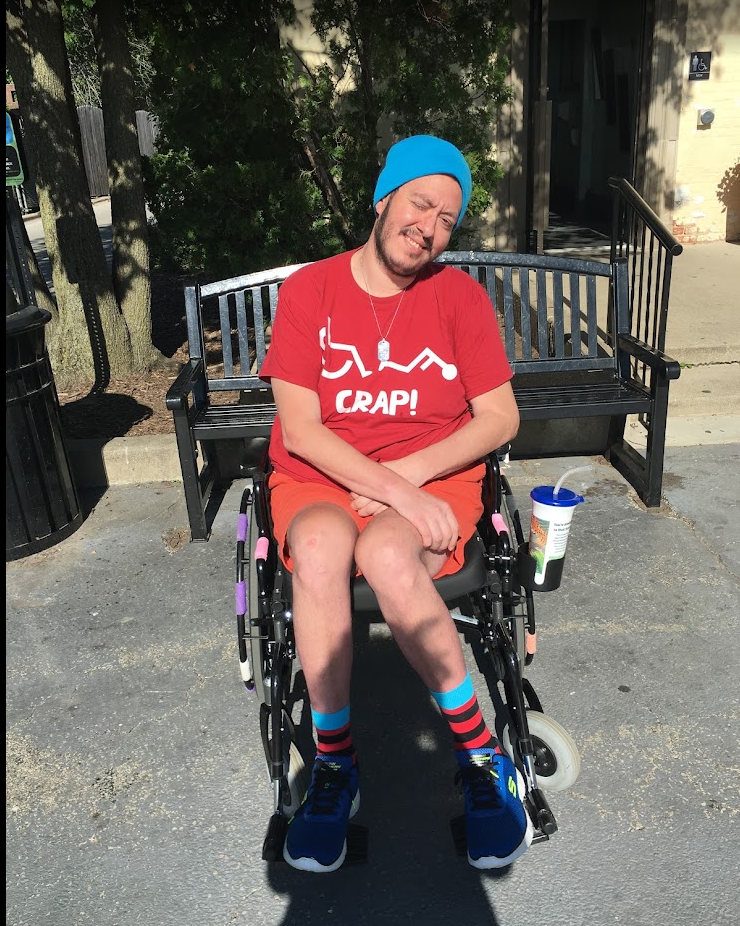
On the other side of a wheelchair, my family rolled me through these zoo streets I once walked as a college kid. Most people from my "before" knew I was sick from social media updates, but hadn't seen me in person. It's like meeting someone in person for the first time; most folks don't expect 6'6" when I step out from behind a Zoom square. Seeing me sit in a wheelchair, illness became my new sheer costume, plain as day, and filled with words I could not say, listening to words others said about me as I stepped back, naked, into the world. I close my eyes and feel something. It's 2017 again, and my mom is pushing me through the zoo. My thirteen-year-old nephew stands in line to refill our Diet Coke with a straw I can sip through when my mom places the cup in the holder attached to my armrest.
I mutter, "Mmm," and raise my wrist to point. I want to say hi. My God, I want so much. I want my bright blue and yellow world where I knew my role back. I want something more than I can see. I want me.
As a patient, is that desire too much to ask? What's the price we pay for nostalgia? Where is the line between now and then? Hope and realism? Acceptance and fight? Gut instinct vs. the black-and-white results? Who sets our goals? Who holds the megaphone?
Today, I almost feel the hug and see my friend Melinda, my former coworker and friend, bracing, seeing me for the first time since I used to stand tall with the jokes and sass. I was her supervisor and work bestie back then in 2005.
"Boy. You put me on Facebook looking with no makeup like this, and I'll slash your tire," she quips, pointing to my wheelchair. I almost pee my pants, laughing. I can still make laughing sounds. She said the same thing to me when I counted her bank once, and she was a dollar short. "Boy. Count it again. I'll slash your tires," when we punch out. I loved her. She was the dependable, take-no-crap mother role of our department. Today, she knew the persona I needed once again.
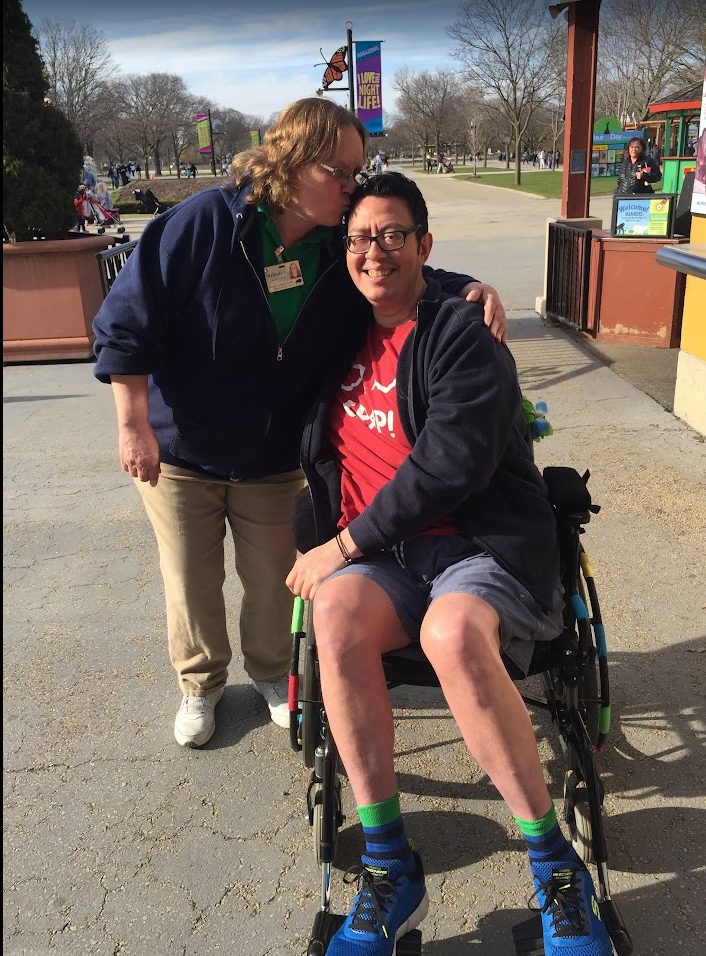
She made saying a silent hello easy as she hugged me. Speaking for myself, all I needed back then was a hug. A hug "before" an IVIg treatment. A hug after a speech pathology session where nothing came out of my mouth. A hug in the neurology office when I was told treatments weren't working - I already knew - and that we would need to escalate things. I smiled, but the gray was there. Sometimes, you don't want words; you just need a hug. Even if it means saying you're not okay and asking someone else to put on the costume of light and laughter.
I shake the memory onto my keyboard and look for Melinda today, but she's not working. I could use a hug as I go through treatment again. I'm getting a haircut today to camouflage the straw mess that even pomade can't hide after strands of black hair slide from my scalp to my fingers in the shower. I suppose a short hairdo will be my costume this season. My mom will tell me I look great, but she says that even when my head is in a trash can, and I'm motioning for Zofran - I don't know that she's unbiased. Still, I need someone else to put the costume on this season because I'm tired.
There's always that first time without your costume - your armor. No wit behind the typed word. No creative photo angle. No way to hide that I'm wearing a hat because I look like an old teddy bear with patchy hair from my treatment. But there's a hug, and that's all the costume I need this season, and maybe even a few ghosts and goblins roaming the streets, looking for candy. I love this time of year. The air hits differently.
I stand for a moment to shake the stiffness out of my legs, limping a bit as I walk around my table. I fell at home on Thursday evening. "I'm okay. I'm fine. I'm fine." My mom rummages through the medicine cabinet for bandages. "Where are they, Jon?"
"I don't know. I'm bleeding. Just anything is fine."
How many times do we say we're fine? How many times do we say, "I'm fine"? If someone asks what we need, do we say, "Dinner would be great. Perhaps pick up some cat food for me." Am I in pain? "No, I'm good."
I breathe and bring myself back to 2016. A few months before speech left me and before seeing Melinda. It's morning, and I have lost before, now, and after.
"Whose wheelchair is that?" My mom stands before me as I wake.
"Yours. You've been sick."
"Have I?"
The costume is gone. The light streams through a crack in my bedroom curtain, my cat beside me. I see a wheelchair and have forgotten my diagnosis. Forgotten I'm no longer exactly who I was. She holds my back to help me sit, holding a straw to my mouth to swish out the taste of illness. I remember. And I reach out for the armrest on my chair and transfer from my bed to seat. She wheels me to the bathroom, newly outfitted with grab bars and a shower seat. I lean forward, and she pulls my shirt over my head. I begin to rock back and forth to help with easing off my shorts. We stopped with underwear at night. With treatment, underwear is just one more costume piece I don't need when the sickness comes. I reach for the shower chair, and she helps me slide over. Shampoo, soap, and loofah are all placed within arm's reach for me. I am naked.
She wheels the chair back and asks if I'm okay. I nod yes as she closes the stall door and I lean into the water she has turned on for me, warm as I like it. I let my head hang in the stream, just strong enough to squeeze shampoo in my palm and begin lathering my head. I refuse to lose all independence unless I must. And I cry with the water, not because I'm in pain, but because the lifting of the veil between life and death is before me - uncertainty in the in-between of before, now, and tomorrow floats gray before me, and I don't know it, but I mourn something. A drive in the car. Ordering an iced coffee. Walking through the park to see the geese float in the pond. Walking these zoo streets as someone who had no idea that my life, all our roles; our costumes, would change.
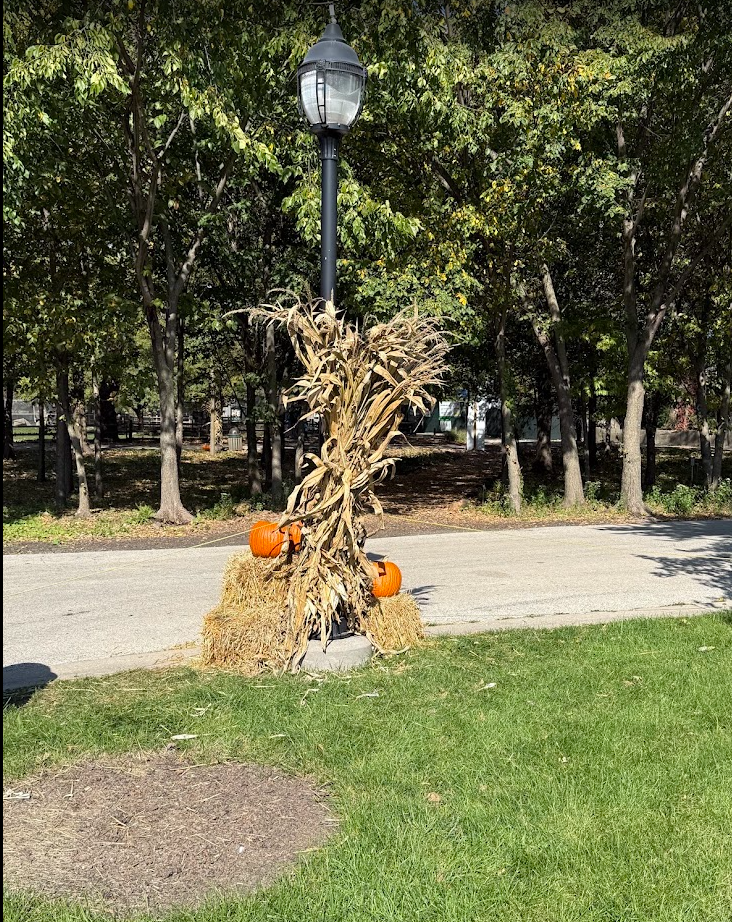
We all have a story. We all have our armor, or costume, maybe a regret or a goal. And today, damnit, I wipe a tear away not because I'm in pain, but because I am here, in this zoo once again, not as an employee or here to explain what's happened to me, but to walk with my ghost within and make peace.
So today, I hobble through the park, bag on my shoulder, Coke Zero from the refill station in hand, and settle down for some Wi-Fi and a homemade iced coffee. The sky is blue. No, not just blue. Blue without limit. It's endless. That's the thing about a rare disease, or an unpredictable disease, or chronic illness in general, from my experience and the late-night Facebook conversations I've had with friends worldwide with CIDP, GBS, MS, or any number of conditions that rearranged our stars to form a constellation dancing in the midnight sky -- we've all noted that there comes a moment when things change even post-diagnosis. For better or worse. My pain lessens while another friend's worsens and we dance in empathy and joy and sadness. I fall and someone else gets up for the first time. And we celebrate. It's beautiful, really. And by daybreak, a blue sky emerges, reminding me I'm here. There is no costume. I am sick. I know that, but I can once walk these zoo streets through gorgeous orange, brown, and red trees leaning into me from above. Cradling this day.
Do I wish I didn't have this illness? I don't know that I can answer that yet because my piece of the sky wouldn't be complete without it. I'm a stranger getting to know me, and if I do say so myself, I'd take myself on a date, much like I'm doing at this table with my homemade iced coffee.
I watch the kids in their costumes, waiting for the night when their dreams are filled with candy and magic.
I love Halloween. For one night, I can be anything. I don't have to be sick. I don't have to be Jonathan. I could be sparkly Superman if I wish. I already have the face glitter. My family will tell me to at least bring my cane wherever I roam on that magical night of freedom. And if I'm doing this illness thing right, and there is no manual for any of us, I hope I have the courage to meet unearned curiosity with a smile and a wink - let them wonder in the gray because I plan on sparkling in my now. I have found my hope, and it's in the ordinary magic of each day.
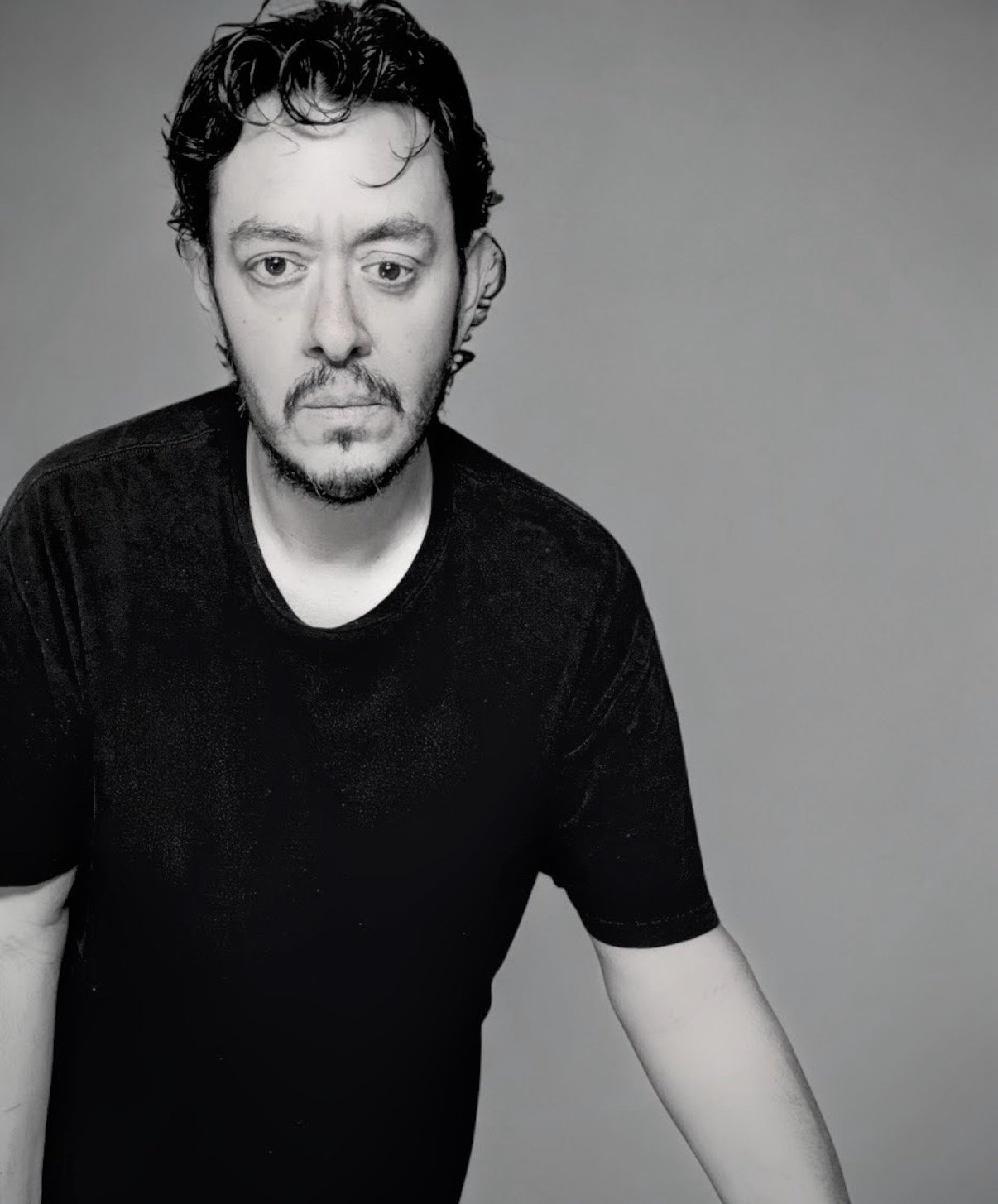
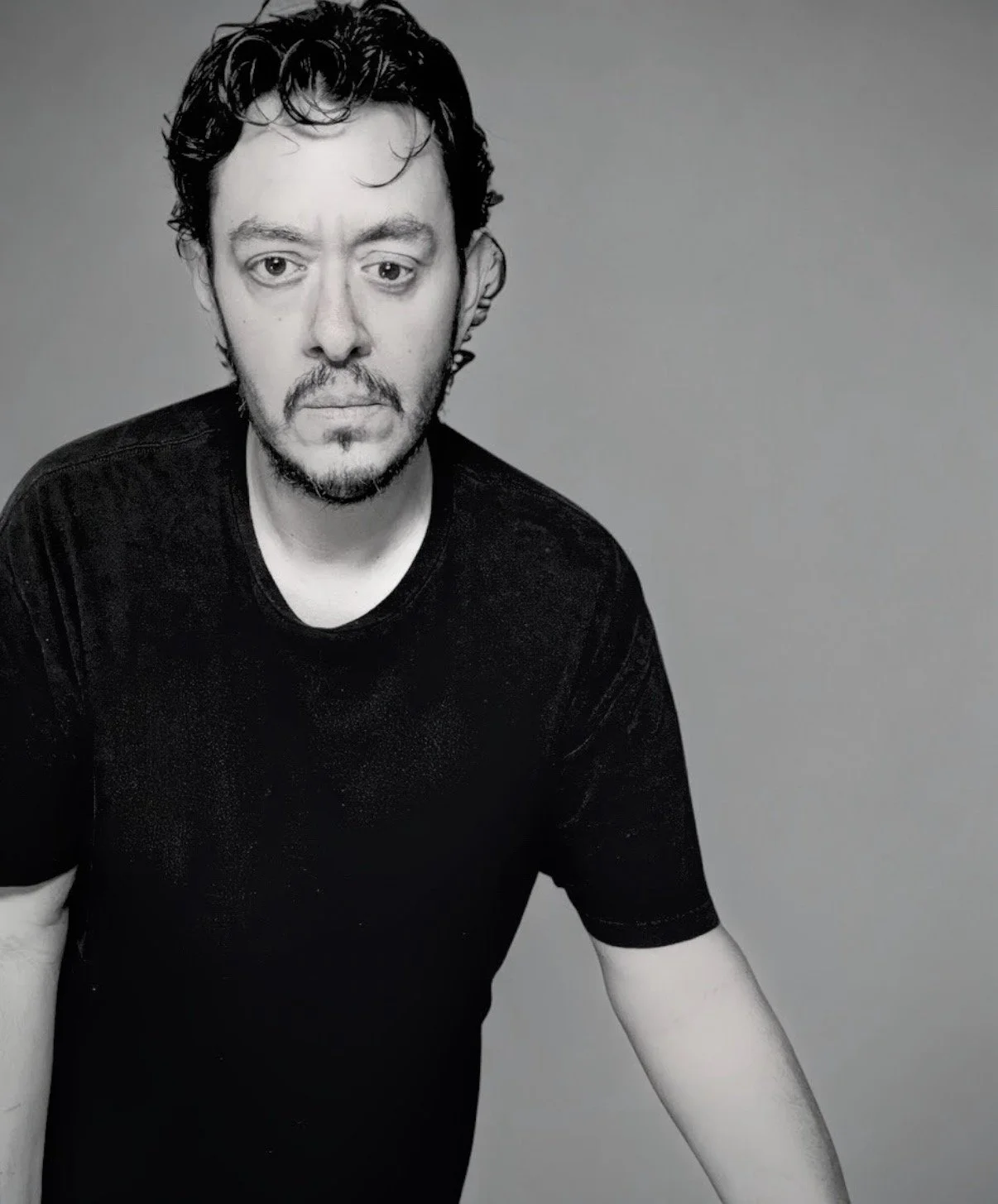
Jonathan Michael Saucedo is a Chicago-based writer, actor, and educator living with a rare autoimmune neuromuscular disorder. He writes about life with chronic illness and disability, the everyday, ordinary moments that somehow become no longer ordinary, and the hope and light that can still be found in the dark moments. Through essays, prose, poetry, and personal storytelling, Jonathan shares the realities of life with a rare disease while connecting with others through the stories we all carry. Find more of his work at jonathanmichaelsaucedo.com.