The season is changing. I feel it in the way that I move, the tug I give on a piece of fabric that clothes my skin, and in the knowledge that the clock is ticking on a landscape where it seems I just said, "I have so much time."
I tell my neurologist that seasonal changes seem to affect my mobility. Almost as if I learn to walk a little further and breathe a tiny bit easier when a new season, no matter how beautiful, knocks the wind out of my sails and I begin again. He tells me seasons shouldn't affect CIDP, but I know better. I live inside this body, not just in summer or fall, but in every season of joy, sadness, excitement, disappointment, health, and disease.
We patients open our eyes to our illnesses and rest our heads on our pillows with them at night. Our knowledge is in our bones. An EMG or an MRI gives us tangibles, but only we know how those tangibles sit inside our bodies. We are the primary source of us.
I open my eyes and stumble over a cane in my closet, glancing at the pill bottle sitting on my bathroom counter, reminding me that I, once again, must take this medication as I transition into fall. I choose an outfit for my EMG: shorts with no lotion on my legs, and a short-sleeved shirt. It's funny how instead of dressing for the weather, we dress for our test day. What's the most convenient and dignified outfit I can wear? Yet I check in at the front desk as Stone Temple Pilots, Plush, drives out nerves and transports me back to my college days. Suddenly, I'm young again. Angsty and healthy. Beer in hand, surrounded by friends, an EMG not in my vocabulary. I thought that season was long gone, but today, I welcome it as I walk through this door alone.
Lying on the exam table for an EMG isn't really the best time to talk to your neurologist, as he's thinking and reading and even hopefully preparing you with a "Big one," heads up to warn you of the impending shock he will deliver to see just how far your nerves scatter.
Family and friends walk through sun, snow, and fire beside us, but in the end, we lie on that table.
I turn my head to the Walgreens across the street and begin thinking. Stone Temple Pilots was probably something I listened to back in the day; my muscles remember the good old angsty days, and my mind time-travels as needles are inserted into my muscles, measuring amplitudes, and waiting for the big one.
I'm back in college. At least I tell myself that as the test begins.
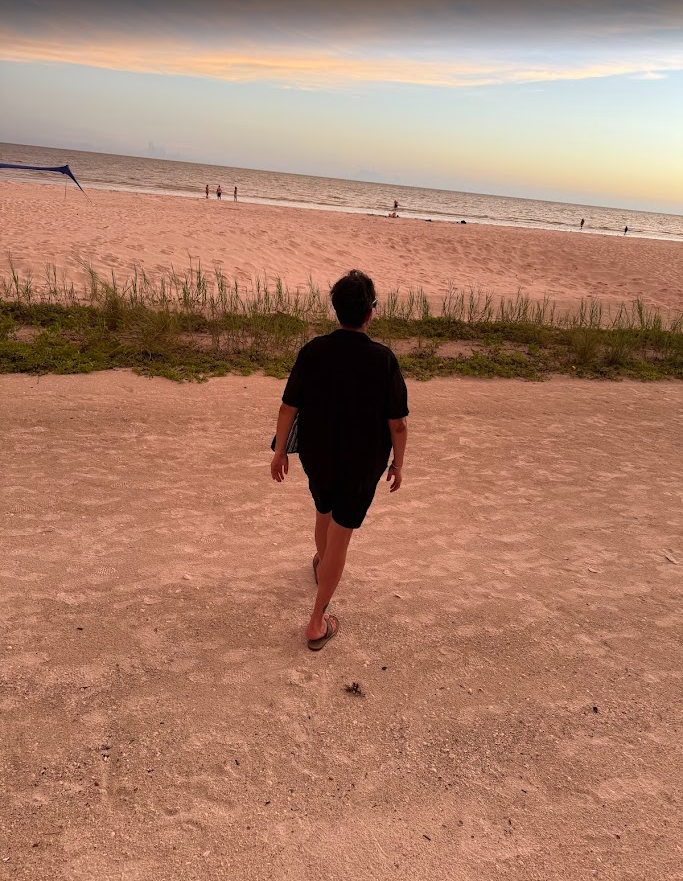
I feel us packing for our annual family beach trip to Florida: Mom, Dad, and Aunt. Through the years, my niece, nephew, and brother cycled in and out of the rotation, but always a constant, a season of water and sky lay before me, a season within a season. A world of peace that the noise of the city dared not touch. A simple tradition that my dad worked hard for as a truck driver, and my mom spent midnights working at the hospital as a clerk in the ER X-ray department, an ER I'd eventually be admitted to years after her retirement.
"Big one." That kinda hurt.
My dad was great at packing for vacation, maximizing space in suitcases and piling up the car to make the stop only for gas and rest stops on a 20-hour drive before age crept up on all of us and my ever-growing legs grew cramped in the backseat. But there was always music, snacks, and laughter, serving as a midnight 70 mph backdrop through the long Indianapolis stretch or the chilling Chattanooga Mountains I closed my eyes to as my dad laughed. He was a truck driver; steep grades didn't bother him. He must have seen beauty in the fear.
My neurologist delivers a shock. My leg jerks.
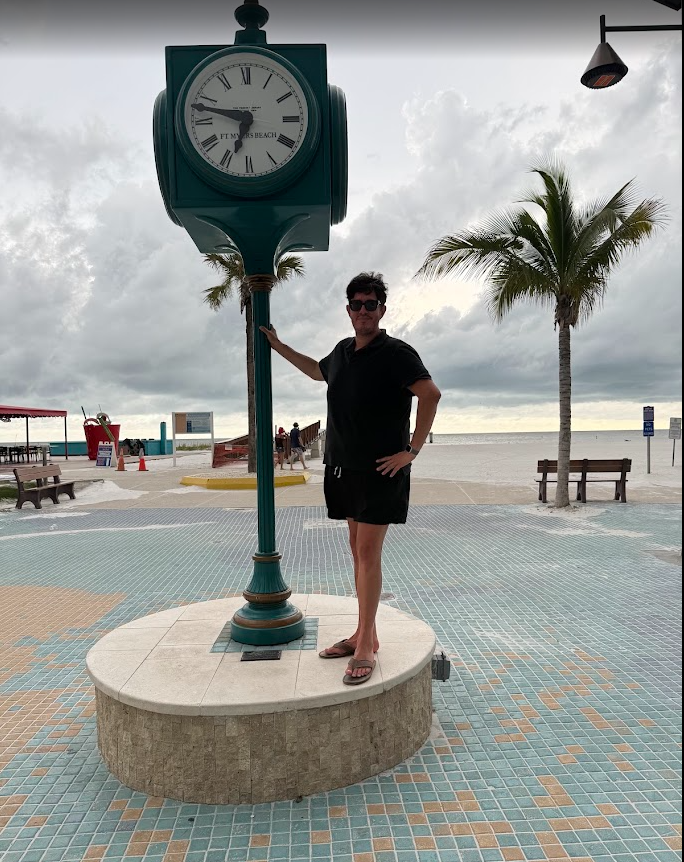
Standing in the kitchen of our condo, overlooking the Gulf, is my beauty. I must have been about 21 when we unpacked after the drive, opening the slider doors to let the breeze in, and my mom asked, "Mike, where's your insulin?"
We called the doctor for an emergency pack as I unpacked my Vitamin C supplement, and that was it: Vitamin C. I looked at my dad as he headed to the nearest CVS and thought, thank God it's not me. Thank God I don't have to take all this medication. I lived in a different body back then. I lived...differently. I think we all can gauge when our season shifts and suddenly a nose begins to run, or a joke is no longer funny, and the air hits our heart in a new way. And the ordinary becomes precious.
My carry-on luggage marks a shift in season for me. Nowadays, my carry-on bag looks like I packed it directly at CVS pharmacy.
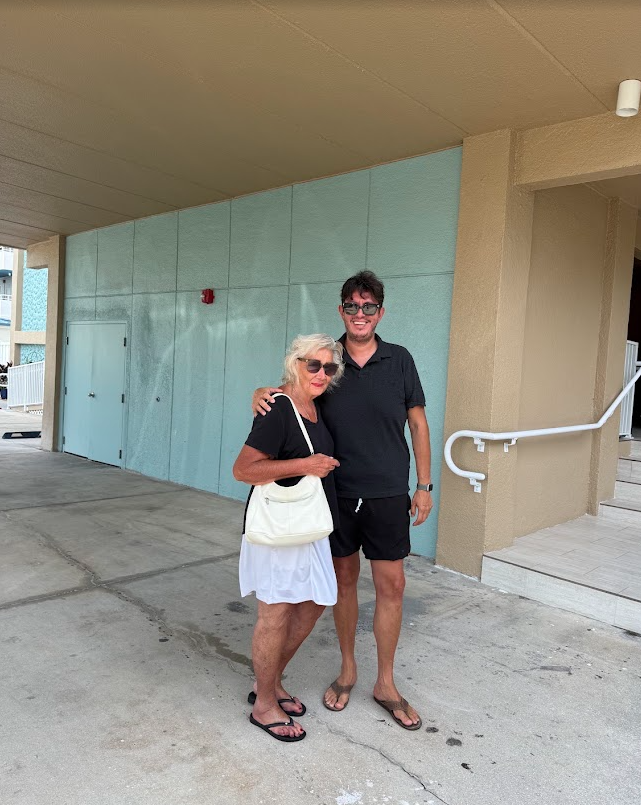
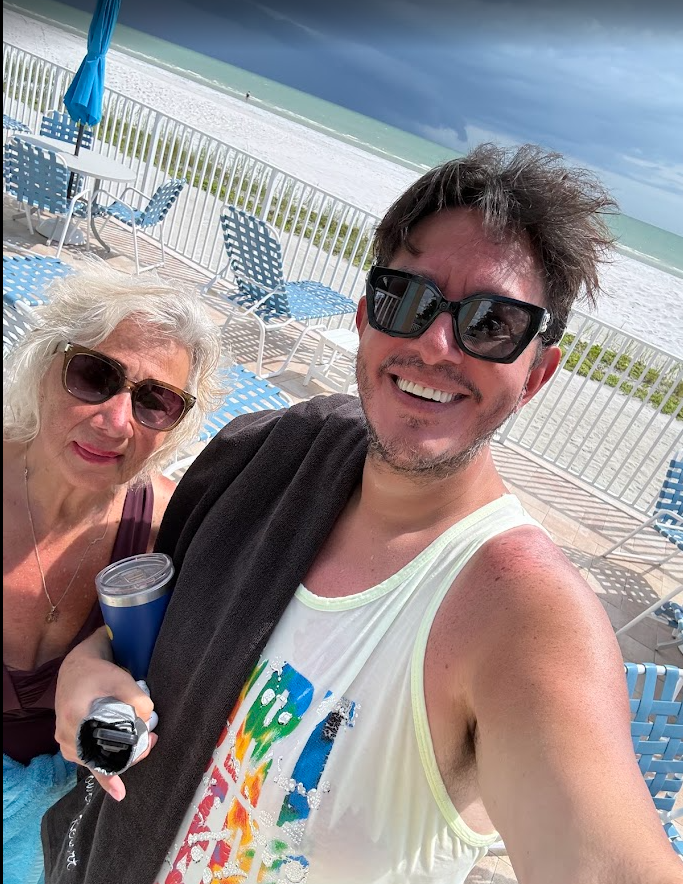
The medications grew, and the people on my journey rotated in and out. My mom, dad, aunt, and I used to travel. Then it was just my mom, dad, and me. Later, it was just my mom, my nephew, and me. Now, it's a party of two: Mom and me. Mom has been my primary caregiver since I got sick. The one to assist me in the bathroom, dress me (sometimes forgetting to put my underwear on as I stared at her, exasperated, unable to physically speak). She fed me. Drove me. She did the heavy lifting. Lately, her heart has been, well, I'll say it's been hurting a bit, and I've been making sure she takes her medications on time and with food. The water is also her happy place. On these Florida nights, the sky is black as can be, and if you're lucky, you'll catch a moon. Listen carefully, and you'll hear the waves on shore. It gives you time with your soul.
Mom drifts into a shallow slumber.
I wonder who will bring me here when everything and everyone scatters away? Who will feed me when my hands no longer reach my mouth? I pray I stay healthy, but with each minute of the EMG, that future is murky; I can't see the ocean floor. Family surrounds me in Chicago, but the end of summer takes on new meaning.
I sigh.
"You okay?"
"I'm good."
Since I began working again, my best-laid plans of teaching full-time and working as an artist just didn't jive with my body. I teach part-time now and work as a freelancer, essentially meaning I prepare for two classes per week, go to the music office to take care of administrative work, and am home by one or two in the afternoon, affording me time to write, audition for a show if I'm strong enough, or just take a nap. Life is quieter now, and I'm learning to love the quiet. I can't bring the beach home with me, but I can bring the soul time.
"Big one." Shit. I focus on the Walgreens outside my neurologist's window, Florida still on my mind, each shock measuring the amplitudes of time. I think of how we packed this year.
I'm the keeper of the medications.
"Ma. We only need one suitcase and my backpack." She is skeptical.
"We'll buy anything else we need when we get there. Instacart will deliver the rest."
I pack my immunosuppression pills. Why does the bottle have to be so damn big? Probably to accommodate the horse pills, which is ironic considering swallowing is one of the reasons I'm taking them. Their effect is anything but small.
I add in another medication to control the spasms in my esophagus, my Vitamin C, and I top it off with Vitamin D for good measure. My pillbox has outgrown that of my parents.
My dad is gone, but Mom is there saying, "Jon, do you have all our medicine? Will one suitcase be too heavy?" There's a method to my madness. I take a breath, reminding her that special services will wheel me to and from the gate, and when we land in Florida, I need to be able to strap the bag to my back, roll the suitcase with my free hand, and hold hers if she trips. I need to make life as simple as possible right now.
My neurologist removes the sticky electrodes and moves them up my leg.
We sit in the airport, baggage between us, and she calls my brother to tell him we've landed safely. We have four hours until we can check in to our timeshare. We need food, even though water burns my esophagus at the moment.
I show her menus on my phone and ask her to choose.
"I don't care. You choose."
"Pleaassse. Choose one for us." I fight back nausea as a Zofran dissolves on my tongue. She chooses the place with good-looking nachos on the beach.
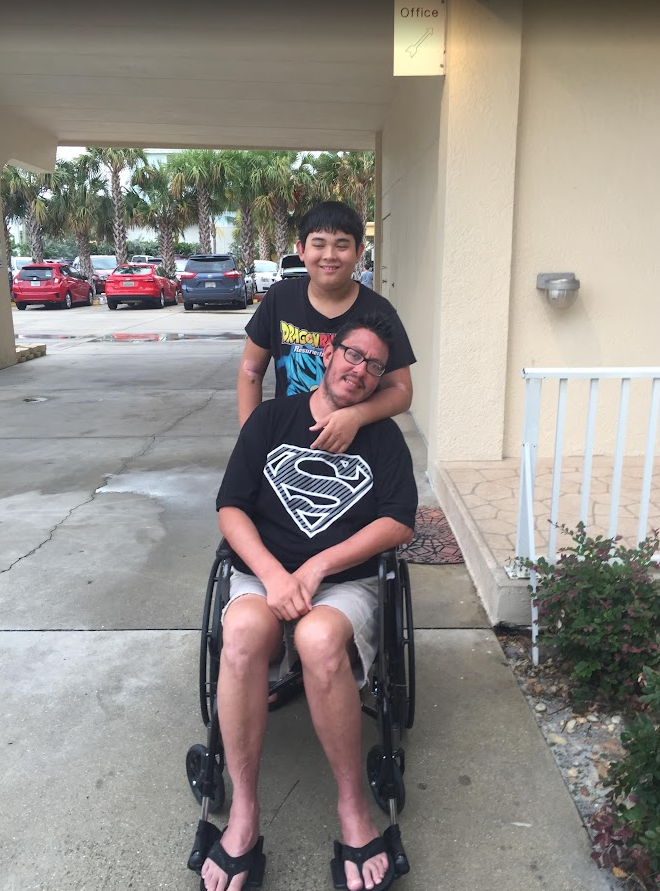
Since getting sick in 2015, my brother began booking our travel, using his miles to upgrade us from economy to first class. First Class was only something I'd seen on my way to the back of the plane or on my way out. I longed for the legroom of those passengers, noting the kids who sat in those seats, thinking, I'm 6'6"; I need it more than you do.
Sitting in 2A was new to me, and I felt kind of sheepish at first.
"Jon," he'd say, "You have your wheelchair to and from the gate, and then special services will transfer you to an aisle chair to get you to your seat. It'll be easier for Mom and Steven." My nephew came with us for those first two years to help. He's not a huge beach person, but he is a great helper. He must have been the same age as the kids I teach now. Steven carried the luggage and sat beside me on the plane, allowing my mom to look out the window.
When he was little, I used to carry Steven and jump on the bed with him. He helps special services get me from my seat to the aisle chair to the wheelchair.
I look sick, and I know it.
"Sir, what would you like to drink?"
"May I have a water?"
"You know you can have anything you'd like."
Ooooh. I felt a shiver go down my still legs with all the room they could handle, but unable to extend them. "Diet Coke, please."
I still haven't truly gotten used to this luxury my brother blesses me with, but he was absolutely right: boarding is a lot easier for my mom and me. Even though I walk through these doors alone, others must hold them open for me. So I try to be easy when I can, though I'd gladly trade First Class for my old summer season. But I'll take unlimited Diet Cokes or Ginger Ale any day if I'm being honest.
Steven stays home with my cat this year, so it's a party of two. The nachos are as good-tasting as they are good-looking. They use the gooey cheese. You know -- the good stuff. Not just the melted stuff. I like it gooey. Is cheese an inflammatory food? Yes. Will I die at the end of this story? I'm projecting a yes. Do I risk tripping in the sand on my walks? Also yes. You calculate the risk-benefit analysis.
The cheese stays, and the water rolls in off the bay, and a busker sings his story. I can't hear the words, but the notes carry a shiver of wistfulness. The kind that travels milliseconds up your leg to make you feel something.
We arrive, and I limp in with a suitcase on my back and suitcase rolling behind me. There is no wheelchair, but the ghost of me gliding through our condo and down to the pool is everywhere. I stand in the kitchen, unpacking medication and groceries Instacart delivered, and I see myself in a wheelchair, looking at the Gulf only a few years ago.
"Big one." My left leg jumps, and I close my eyes to the Walgreens.
I step onto the pool deck.
A season of remission or steadiness or non-flare times, however we choose to categorize these times for ourselves, carries joy, but also a weight, or a tingle that an evening breeze off the beach brings, a reverence for what was and may possibly once more be. And this is something I have yet to reconcile in conversation with people who knew me when my season was dark and gray.
"Look at you! You don't need that chair anymore."
I breathe. First of all, don't talk about Sue. That chair gave me freedom. She was and is a cherished friend. I don't even think it was the English teacher in me using personification to cope. It was the fashion-forward Jonathan thinking, at least this chair hides my last stubborn fat roll the treatment hasn't gotten to yet, and lets me sit comfortably with my top button unbuttoned. You find the wins.
"It's a stronger season." That's a phrase I've been experimenting with. I wonder what these well-meaning commenters would say if they saw me curled up in the condo once the curtains were drawn for the night and I cursed myself for not getting a pain prescription. My mom asks if I'm okay.
"I'm fine. Did you take your blood pressure meds?" I have to keep us both healthy this season.
It hurts. Physically. My GI tract feels touched by fire, yet a bottle of antacids and a package of Zofran sit patiently within the medicine cabinet for that moment when I can take no more. My memory zips back in time to when I wish I had taken note of the tones of red and orange sun in summer, the crunch of leaves beneath my feet as I ran outside with Steven, and of the last time I did something so normally for the last time, from when I was simply Jonathan.
My neurologist wipes my legs clean. "Evidence of disease is still present, and it's progressed."
I'm back to 2026, present day.
I nod. "But I'm walking."
"I treat the symptoms of the patient, not the numbers on this machine."
"So we continue the medication?"
"Yes." It's that simple, and that complicated all at once.
I make my way out the door as my mom looks at me for a sign of what may be coming. Before I speak, I pray. No, not exactly. I speak a poem to myself as I make my follow-up appointment and lead my mom to the elevator. A speech of sorts. An inner monologue to get out the uglies.
This happened so fast. I wish someone had told me. That one day I would need a wheelchair and someone to help me go to the bathroom, that remissions don't last forever. That the last time I stood so normally would be the last time I stood so independently. I should have taken better notes. I should have stayed outside just a little while longer. I should have prayed harder or stopped partying sooner. I wish someone had told me that it wasn't my fault. But what I do know is that my nachos melted in my mouth and I didn't choke. I took walks on the beach for two weeks, some of them 5-minute walks, some of them 20-minute walks. I felt the sun. I touched my fingers to the water and ran them through my hair. I drank all the First Class Diet Coke on board, and got both my mom and myself to and from Chicago to Florida safely. Something good happened this season, even if the numbers don't show it. A season happened. That's pretty huge.
"How'd it go?"
"Still sick. Hungry? I want chocolate."
So I get chocolate. I get chocolate because that's all you can do: enjoy the simple moments of each day. They go by so fast and taste so good.
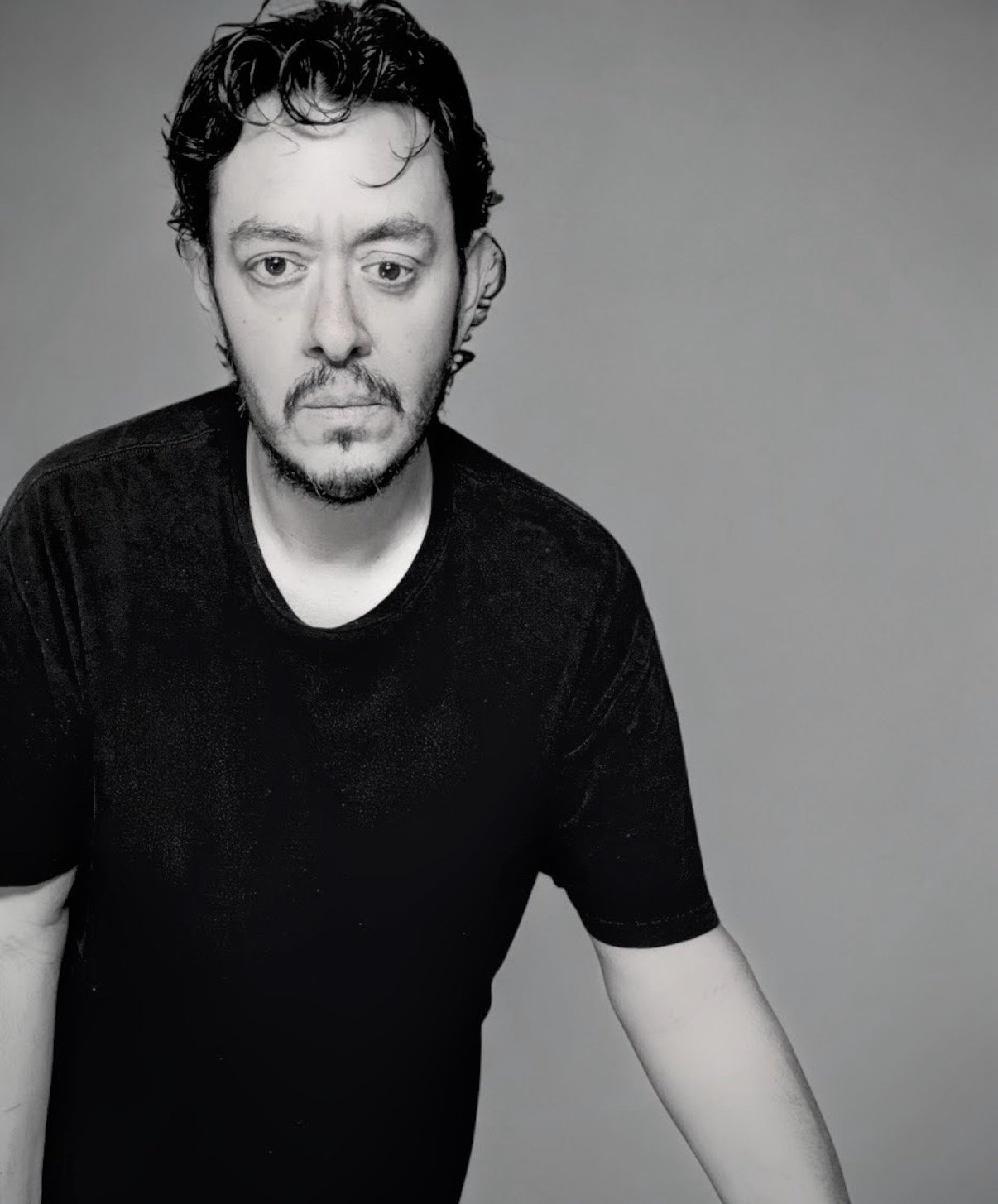
Jonathan Michael Saucedo is a Chicago-based writer, actor, and educator living with a rare autoimmune neuromuscular disorder. He writes about life with chronic illness and disability, the everyday, ordinary moments that somehow become no longer ordinary, and the hope and light that can still be found in the dark moments. Through essays, prose, poetry, and personal storytelling, Jonathan shares the realities of life with a rare disease while connecting with others through the stories we all carry. Find more of his work at jonathanmichaelsaucedo.com.