
"Fashion Is for Everyone": How One Patient Advocate Is Reshaping Representation
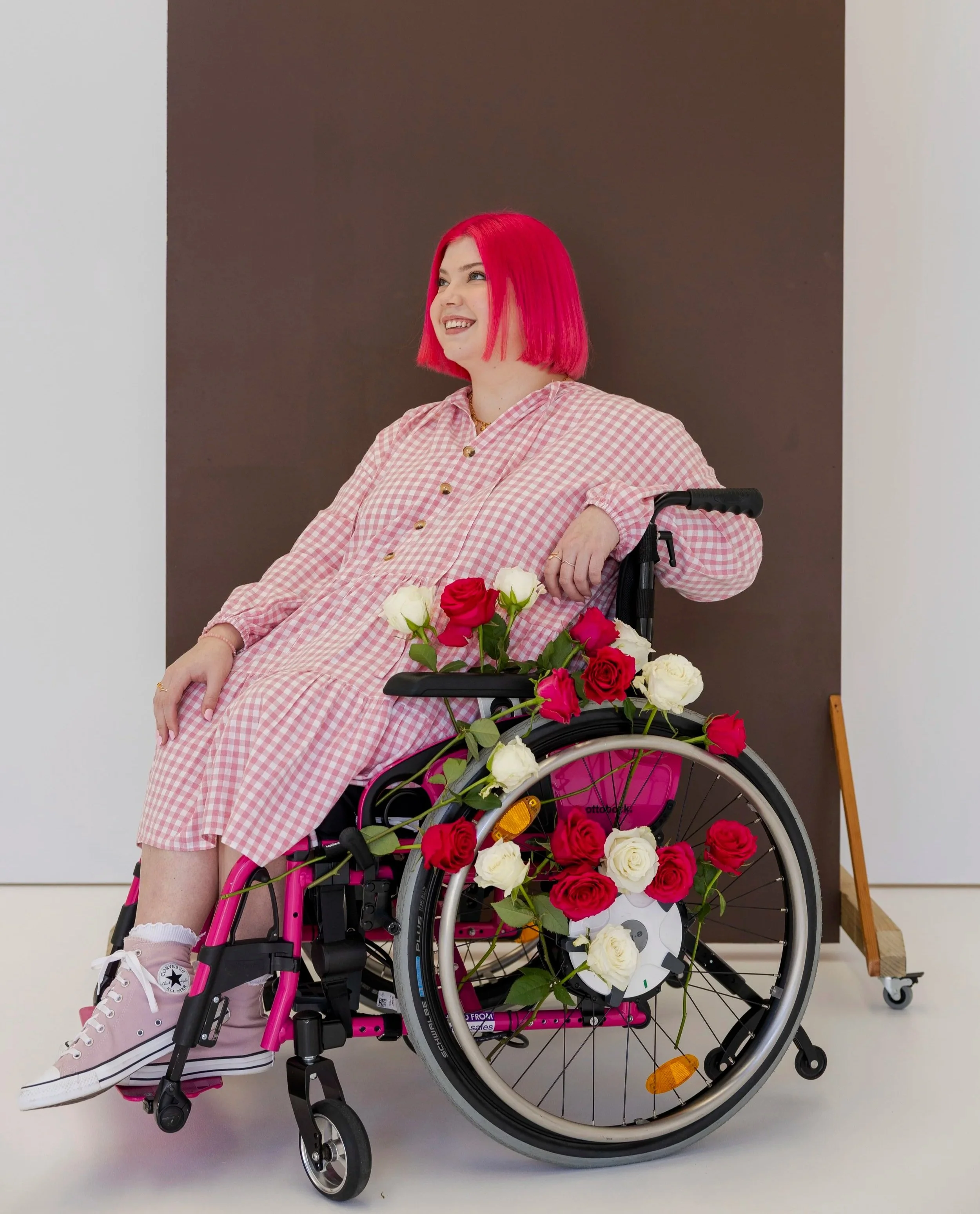
Before she pursued a path in fashion and advocacy, Jaimie was getting a Ph.D. in astrophysics. At 23, her life revolved around a carefully planned career in science. Until one day, she started feeling numbness and tingling in her feet – easy to ignore as someone who liked to sit cross-legged all day. Soon, however, the sensation began to travel up her legs alongside fatigue, pain, and difficulty walking. After five months of medical tests and doctors, Jaimie was diagnosed with Chronic Inflammatory Demyelinating Polyneuropathy (CIDP).
What followed was not a straightforward tale of “overcoming adversity”, but rather something much more complicated – it was learning how to exist visibly in a world that struggled to understand disability outside of a simplified story of tragedy or inspiration.
"There’s often this perception that if someone becomes disabled or chronically ill, they must have done something wrong, but rare disease and chronic illness can affect anyone,” she says. “You are very likely to either experience it yourself or love someone who does."
Now 27, Jaimie is a writer, content creator, model, and advocate who works to push conversations about rare disease, disability rights, and accessible, inclusive fashion into the mainstream.
As her relationship with disability evolved, Jaimie became increasingly aware of how absent people with disabilities and mobility aids were from spaces she previously looked to for self-expression – especially fashion.
She struggled to find representation that felt authentic. Existing fashion campaigns incorporating disability felt watered-down in order to be digestible for others. Jaimie wanted something different:
“In an ideal world, if someone clicked on a clothing website, they would see someone disabled in one out of every ten pictures.”
That belief eventually led her into advocacy work with brands already committed to inclusivity, encouraging them to think more intentionally about the communities still missing from mainstream fashion spaces.
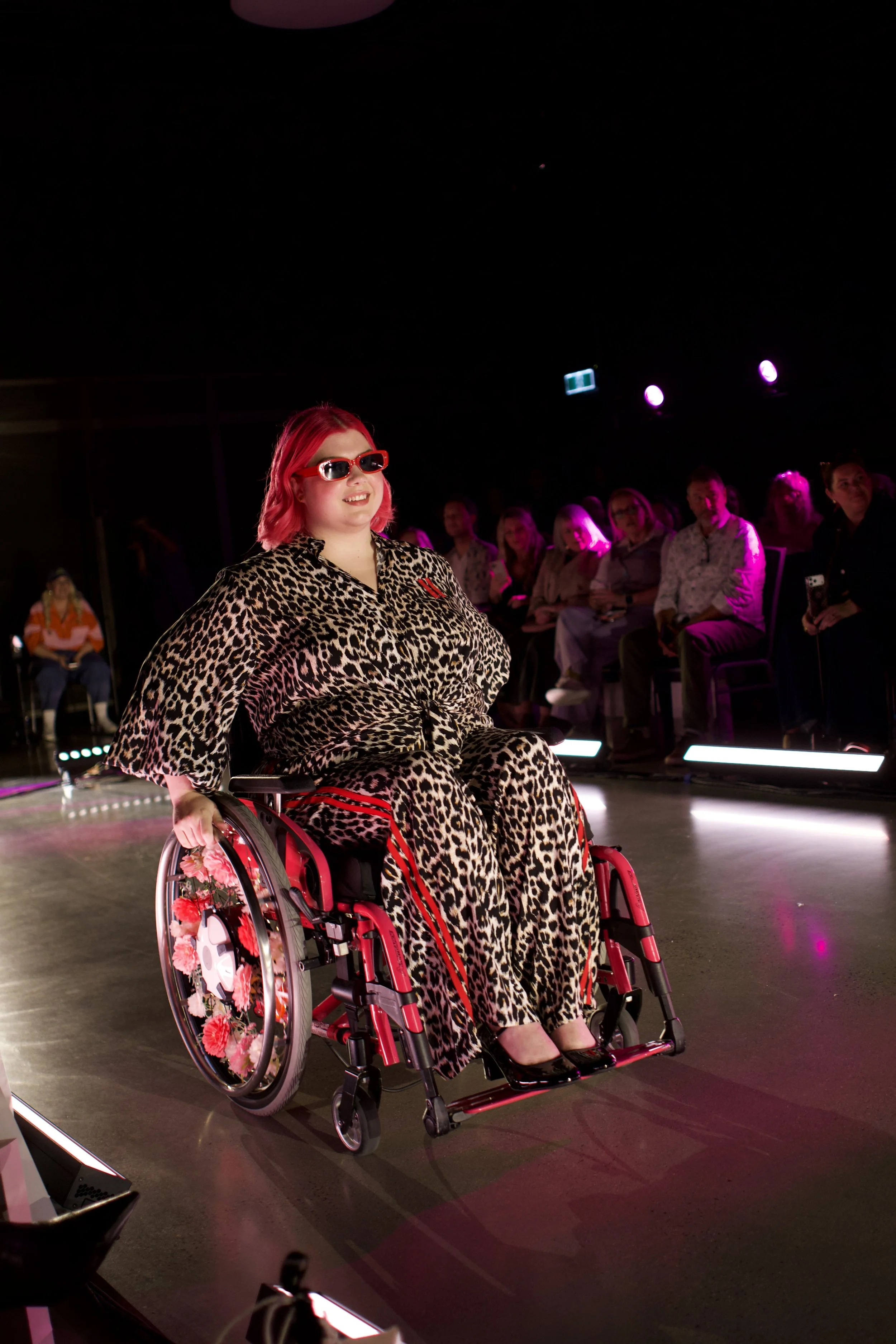
Recently, she was in her first runway show.
For Jaimie, disability-inclusive fashion is about visibility, participation, and belonging. Being able to see disabled people reflected naturally in public life rather than treated as exceptions to it.
That same philosophy shapes the content she shares online.
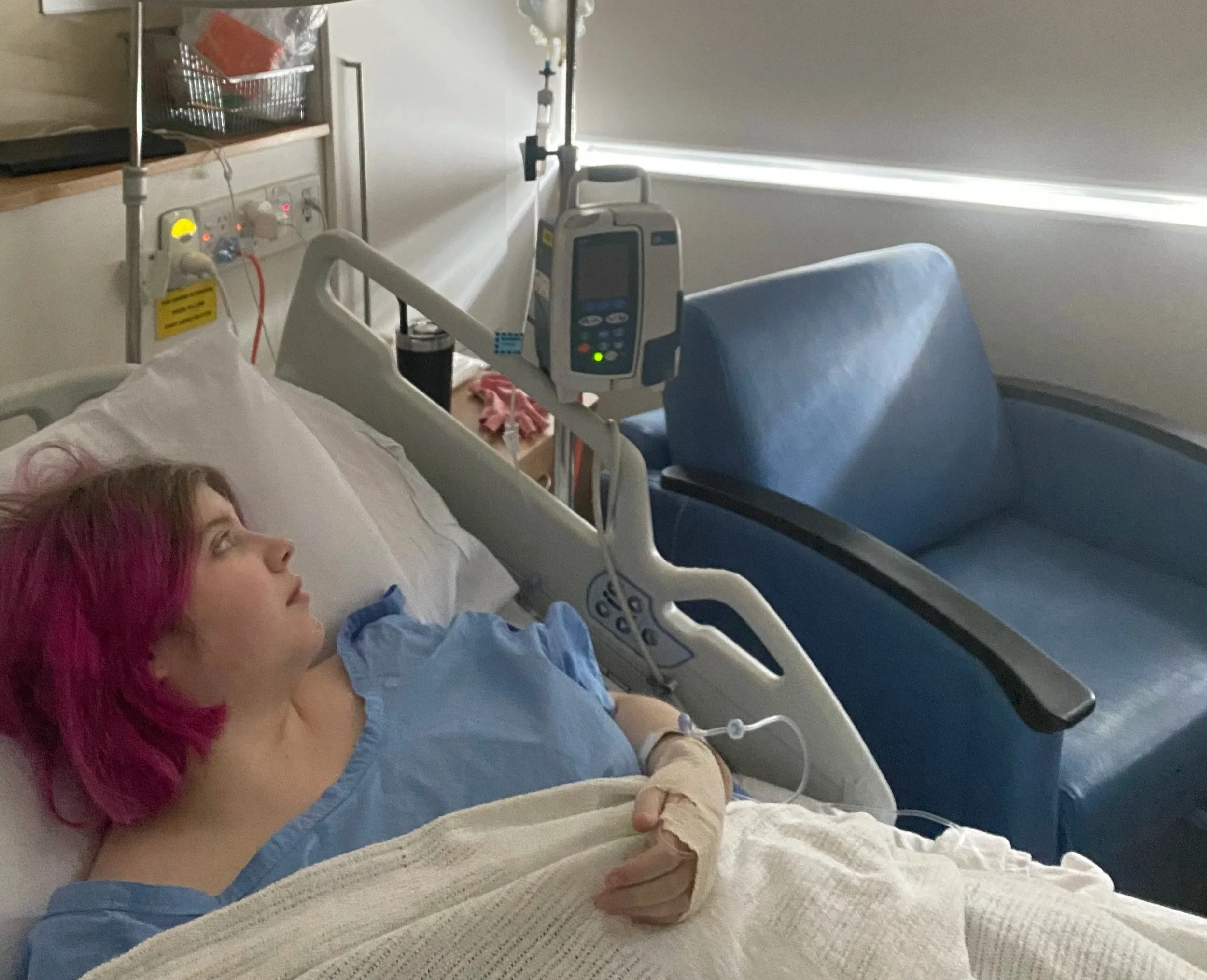
She first began posting while in the hospital receiving treatment, initially as a way to update friends and family. But she was also searching for something she struggled to find herself: people openly discussing disability and chronic illness without shame or performance.
“I was looking for someone sharing their story,” she says. “Then my mom suggested, ‘Why don’t you be the person someone else might need?’”
Over time, her platform became a space where others could see disability represented differently. One moment in particular stayed with her. After seeing one of Jaimie’s campaigns, a child turned to their mother, pointed at the ad, and said,
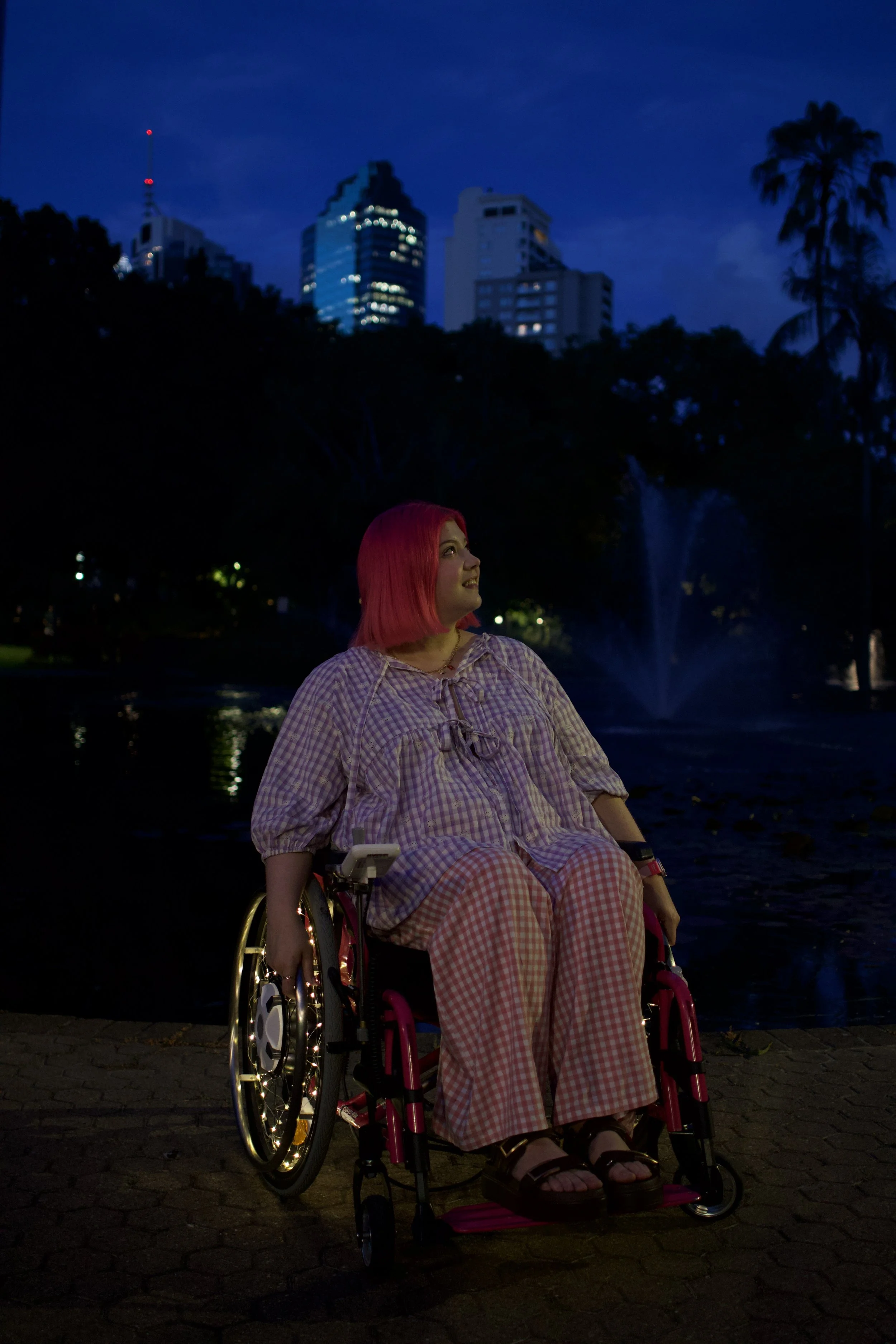
“Look mom, I can be beautiful too.”
For Jaimie, that moment captured the importance of authentic representation far better than any campaign slogan could.
Sometimes people need to see to believe. Visibility can shape what people believe is possible, especially for those who rarely see themselves reflected in the world around them.
Ultimately, Jaimie dreams of a future where disability representation becomes ordinary – integrated into media, fashion, and public life rather than treated as an exception or source of inspiration.
She doesn’t want people to see stories that define disability by loss or a battle of overcoming; just people allowed to take up space, exactly as they are.
