I'll Always Speak For You On returning to the classroom, advocacy, and teaching compassion
It takes your breath away. Literally. That's not hyperbole. Sitting in a wheelchair with 28 sets of little eyes on you as you read from the SmartBoard. I don't recall what I was reading at the time: something about Roald Dahl and imagination, and his use of it in his writing. It was my first week back in my classroom after taking a week away.
It was my first time back in front of the room, full-time, in seven years. I was back.
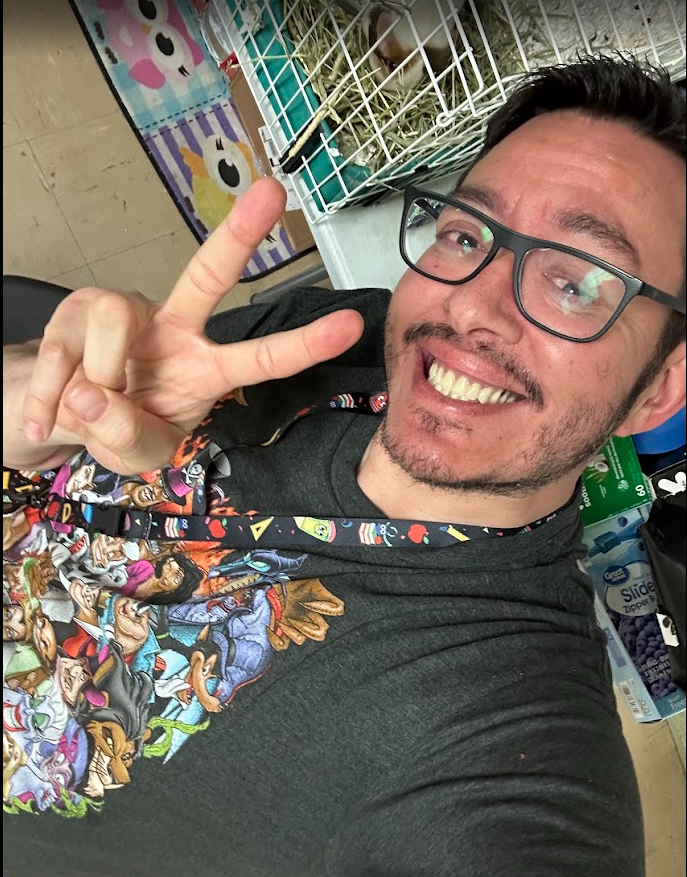
Two months ago I said yes to a position in a well-loved old building with three guinea pigs, twenty-eight desks occupied by 28 super loud sixth graders, a shelf full of books, a teaching certificate freshly off the renewed press for another four years, and no elevator to help me rise..
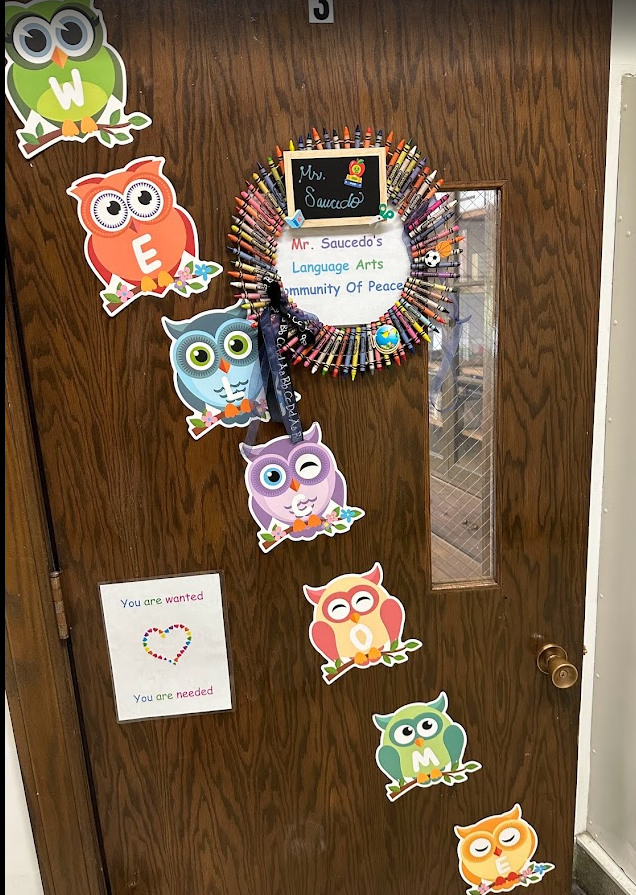
I said yes to a building with no elevator. How could I have been so naive, but I suppose dreamers are the ones who refuse to fully wake from that state of hazy bliss, touched by sadness from nightmares we have already swam: saying yes is the only thing that makes sense. It was two months in and already my body felt like it was slipping away. Down, down, down the 43 steps of the well-loved building with no elevator where I took a position in during a season of good health. The advocate in me cringes. The disease in me remains proud.
It's 2026 now and there's a photo I look at where I'm standing unaided, my 6'6" self surrounded by 28 of the tiniest humans beings I had to crouch down to make eye contact with. We are smiling in front of our bookshelf. It's Day 1 and we are smiling. You forgot how it is to shift from that hazy bliss back into nightmare when the season is good.
It's mid-October and two weeks ago, leaden legs trudging to the first floor, I grasped my derby cane with the silver handle and blue wooden shaft that I fished out of my closet. I knew I'd need it again someday; I just didn't know how soon. The kids named him Gandalf and it was funny because what else could it be? A tragedy? It's sixth grade--life is supposed to be silly.
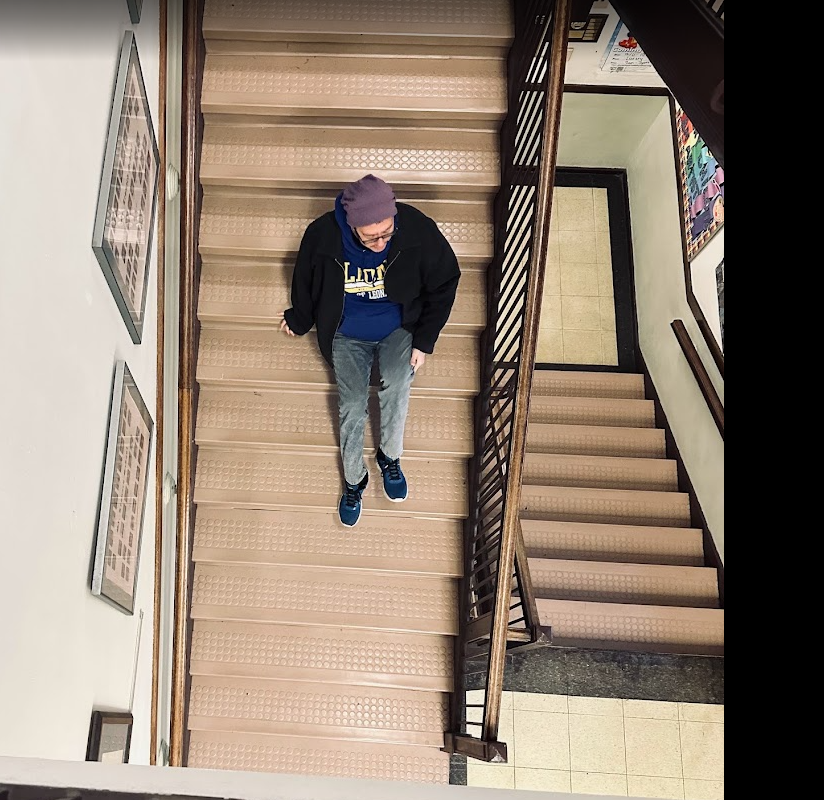
I pulled each leg up the stairs, using my glutes to remain upright, and Gandalf to balance each step. Were these stairs this steep back in August?
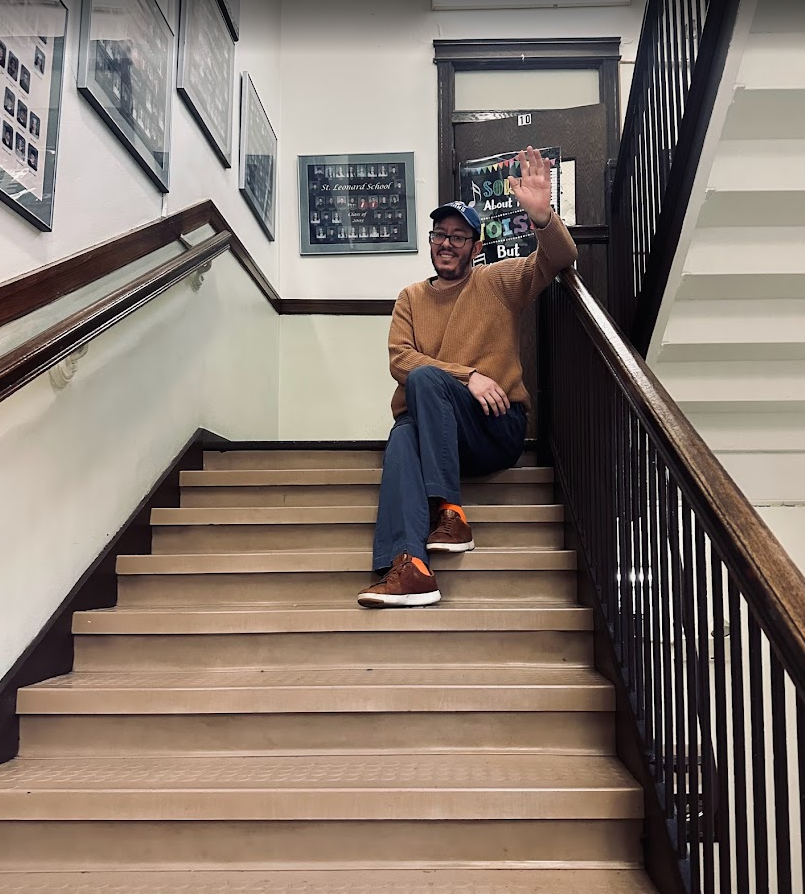
Five minutes later, I made it to the third floor, and my left quad began to quiver, as it had so many times before, and I fell, crumpled in the hallway, propping myself against a locker, whispering on my cellphone.
"Ma. I fell... no... don't come and get me...I want to get up before anyone sees me. I think I need to call the neuro."
Since getting sick in 2015, six months before my diagnosis, my left leg was always my tell. As patients, we know our tells, and mine was yapping. This is the quad that gave out when I tripped in Wal-Mart, shopping for snacks for the student I was working 1:1 with in the special education division of the local high school before I landed on the other side of disability. And it was as simple as that. One trip down the aisle and I was never the same.
Sitting in the darkened hallway alone, I turned to the stained glass window overlooking the church steeple across the way as the sun, only starting to reach the top of our building, created shadows, a backdrop for my ragged breath, already knowing this season was ending and it was too soon. This wasn't supposed to happen so soon. I did everything my neurologist asked of me for my Chronic Inflammatory Demyelinating Polyneuropathy (CIDP) diagnosis. I call it the Aldi brand of MS. It lightens the explanation and saves me from talking about frayed myelin, the peripheral nervous system, and that yes, sometimes this disease hits the central nervous system. This disease does all the things you weren't told as your EMG was being performed. All the things you weren't told could happen, and it's when you let your guard down that CIDP creeps up in the night, so yes, I laugh because deep down I pay reverence to it and humble myself knowing we must coexist in order for there to be smiles and laughter and love. Without this disease, I wouldn't have found my 28 kids. I didn't want to lose them.
"It's ok. It's ok," scattered through my mind as I climbed to one knee and pivoted to face the lockers for balance.
I rose. Gandalf and I unlocked the door to my classroom, where three guinea pigs, Scholatico, Oreo, and Mama Carrot greeted us, chirping and squeaking for cucumber slices, courtesy of my mom. "Hey guys. I'm coming. It's okay. I'm here. I'm here."
***
You go through a season each day in the classroom, never knowing when someone will burst into tears, or ask a question that has you hopping onto Google as you say, "Anyone have any ideas? Anybody?" buying yourself time until you have the answers to fix everything. Until you have the tools to give your kiddos to help themselves. You tend the seasons in your classroom. You just figure it out by instinct and training. But sometimes you get caught without an answer. Without a Google tool for the kids. You find your branches bare as you shiver and say, "It's okay. It's okay. We're okay."
I prepared sub plans with little notes: make sure this one has breakfast because he doesn't eat, and this one gets nosebleeds, so make sure there's plenty of Kleenex and gloves in the first-aid case. Don't forget that this one has an EpiPen she can self-inject, so be careful at birthday parties that no nuts, dairy, or eggs touch her desk. Also, make sure to throw in some Language Arts along the way, but tend to them while I'm away.
I went to the neurologist, and he said it was time to go back on treatment. High-dose immunosuppression, also used as a "light" chemo drug. Light my ass. This flare-up came fast. My legs twisted when I tried to stand, and by the end of the week I was still 6'6", but you'd never know it. I was sitting down.
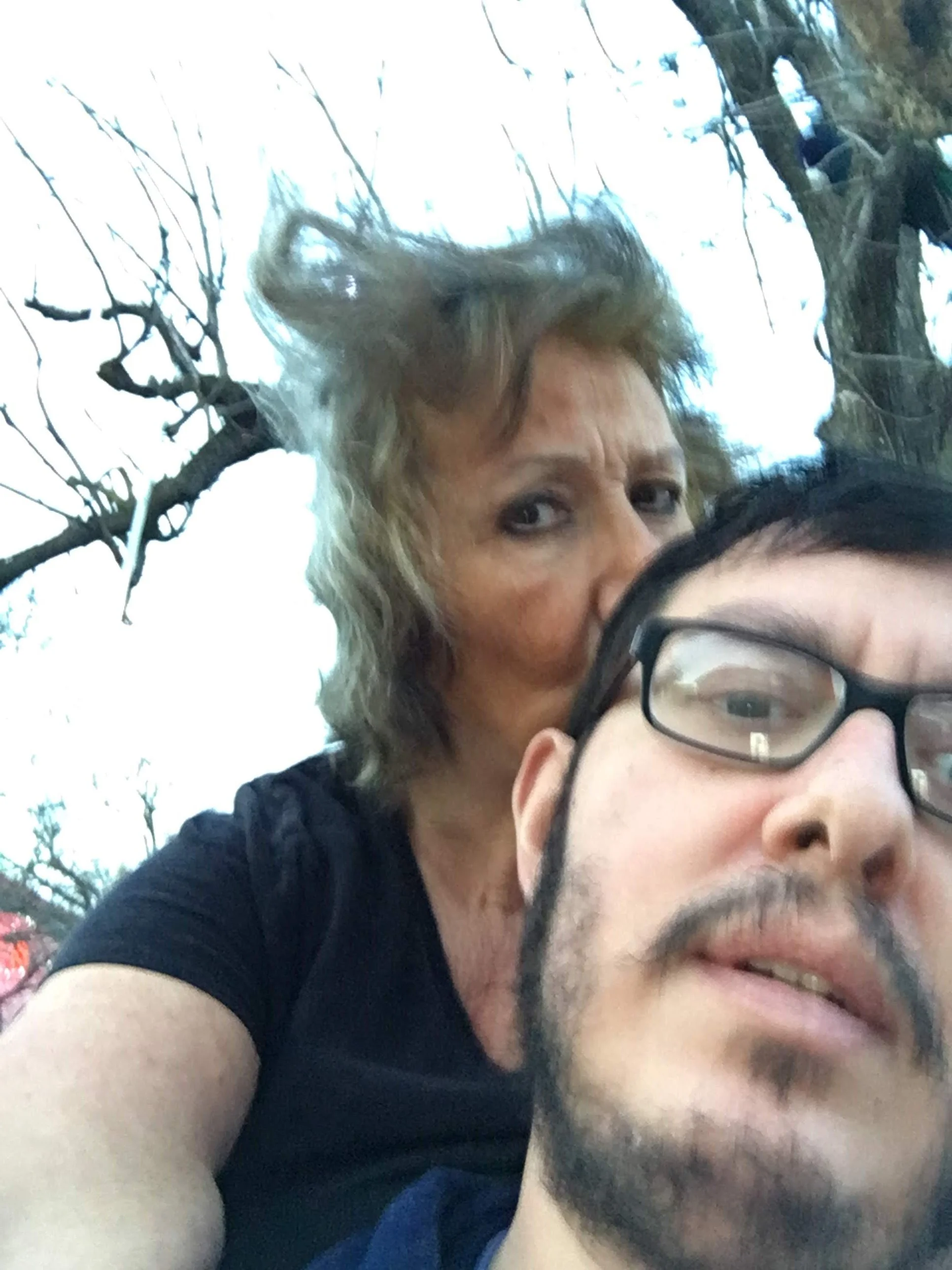
I sit in my maroon-framed wheelchair with apple-green spokes, a choice I don't fully understand why I made at the moment, and my family asks the question: Do you need to take resign? I look at the selfie I took of us only two months ago to post on the school Dojo. We look happy. We were happy. And the tears begin to fall. I don't want to leave them. I'm not ready to go.
"No."
We make decisions that don't always make sense to the healthy eye. To the person looking at us, thinking, why don't you just stay home, or you didn't look sick two months ago, you need to listen to your body and rest. What the untrained healthy eye doesn't know is that from our hazy bliss-filled decisions, we are swimming from our nightmare. We are doing what we need to survive, even if that doesn't make sense to you.
Together, my mom, aunt, and nephew drive to the school after hours, where the operations director lets us in and the principal meets us. I snap into beast mode. "Ma. You and I will get here by 7 am, before the traffic, and come through the main door using this chair." The principal brings out a portable wedge ramp. Being a private school of a certain age, ADA laws aren't in place to accommodate people with special needs. I tell the principal exactly what I need: a place to store my downstairs chair, a chair on the third floor, modified recess duty, notification to the fire department that there is a person on the third floor who will need assistance in the event of fire, and flexibility to leave my room when I need to throw up. He nods, solemnly. I create a DIY 504 plan for myself.
I don't want to leave them.
"We'll leave this basic wheelchair at the bottom of the stairs. My custom one plum can live at the top of the stairs. I'll scoot the stairs on my butt as they taught me in rehab. I don't think I can boost myself into it, though. I need that little step stool we used to use at home. I'll boost my butt onto it, and then I'll pull myself up into my chair." My mom takes note. God, I'm 43, and my mom has to take me to school each day and carry my bag for me. We dreamers do what we must to survive the night.
I know it's not right, but I don't want to leave them.
"Then, we'll just wheel into the room, and once I'm in, I'm good."
Then it hits me. There's a step to get in the bathroom that's too high to pop a wheelie for. Damn. The unexpected in the unexpected I didn't plan for. The principal, looking bewildered, but compliant, tells me, "We have a wedge. We'll put it in there and leave it for you." It's funny how the sick have to take charge. A few weeks later, I hear one teacher complain, "Are we just gonna leave this here?" Well, I could just sh*t in my pants to make you comfortable runs through my mind. "Yes, we are," I say with a smile.
I have my mom take a video of me rolling through the room that we need to reconfigure for me to access all the students and my supplies. "When I say go, start recording."
"Hi guys! It's Mr. S. So you know I've been a little sick, but I've got medicine, and this is my wheelchair." I pop a little wheelie. "I'm probably going to need you to help me do a few things like pick things off the floor if I drop them, but otherwise, things are pretty much the same. Ma, ma, turn the camera. Stop recording."
Mom records me sideways as if she tilted the phone mid-take. Don't ask me how. I post the video on the school Dojo communication system, and one mom writes, "LOL. You telling your mom, ma! How come you're recording sideways? We love you, Mr. S."
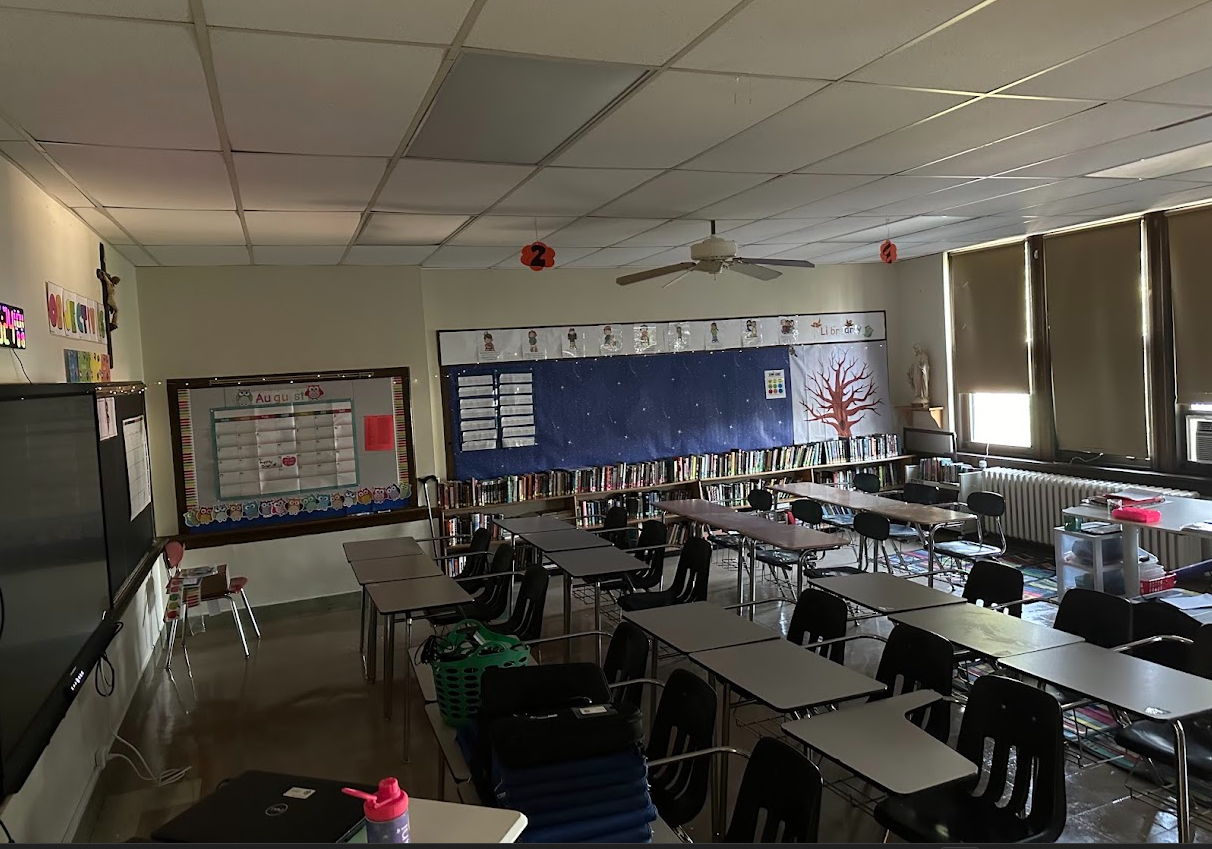
And on Monday, I'm seated in front of 28 sixth graders. I don't remember the exact words, but I feel the hugs. I remember the hugs from their little arms when we saw each other again. And like no time had passed, I was teaching, and it wasn't scary like I thought it would be because for me, the worst had already happened until the day you need to throw up, and you practically throw yourself out of your chair to the bathroom floor to heave. God, I need pain and nausea meds. This is harder than I thought. I've done this before, but back then I was home. Lying on my couch. Was I stupid to dream?
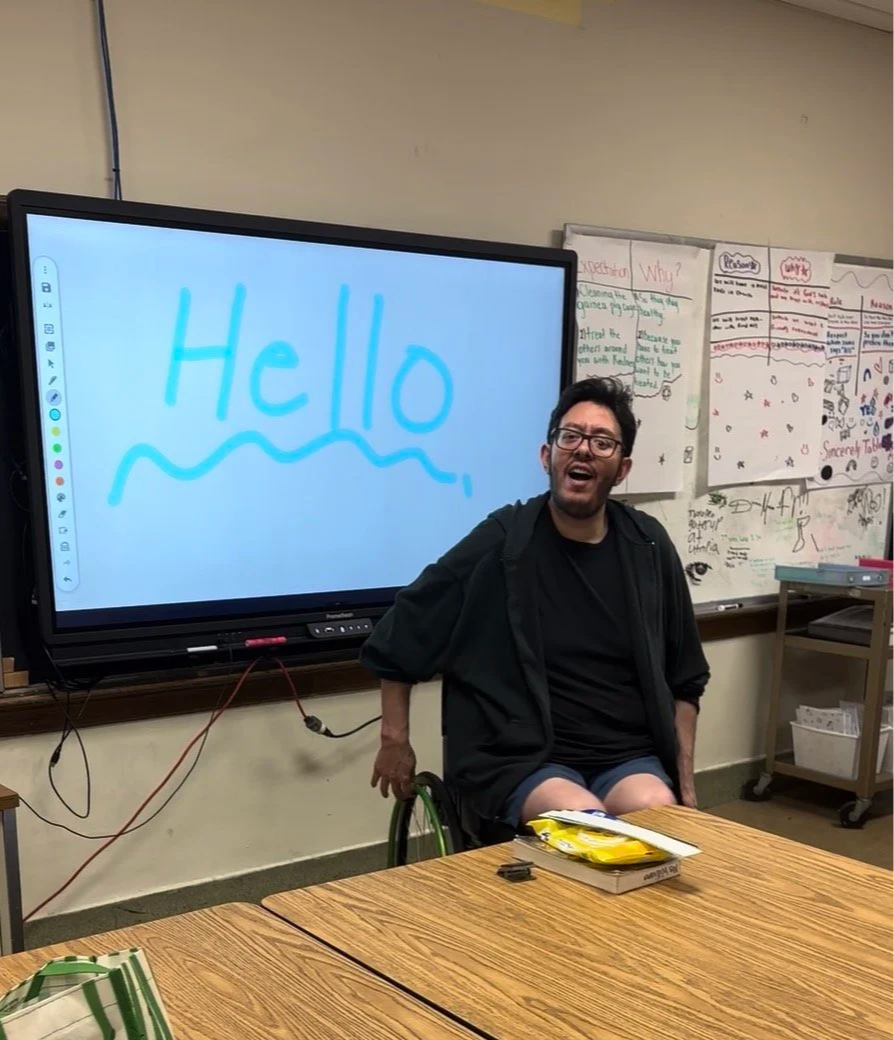
My voice falters. A broken radio. Halting. Stilted. Messy. Years prior, I spent time in speech therapy learning to speak again, using augmentative and alternative communication from an app on my phone. I thought communication difficulty was a thing of the past. When it's chronic, nothing is ever really a thing of the past -- even hope. Chronic illness, be it autoimmune, neuromuscular, whatever it is -- nobody can take that hope unless you give it away, and people will try to snatch it because they don't know better yet. So I teach.
I read Roald Dahl to my sixth-grade homeroom from my chair, and I lose the strength to speak. I pause. My voice falters like a broken radio. There's a little boy in there that doesn't yet quite fit in with the others. Kind hearts are often misunderstood.
"Mr. S., would you like me to read for you?" I nod. I watch him read the passage as I catch my breath. The class is quiet, watching this little teacher.
"Thanks, buddy."
"I'll always speak for you."
My sixth graders were a dream. They did not know how to mock; only how to love. My seventh graders were a different story. I hear, "He sounds like a re**rd."
I used to advocate for teens with special needs as an aide at the high school. I know how to shut down that language for others. I know how to change an 18 year old's diaper in 30 seconds, how to lift a 90 lb teenager from a motor chair to the toilet, how to listen to someone as they speak to me through their AAC device. It's the heart work for myself I never learned. I never learned how to protect my heart. I just scooted 43 stairs and was called the R word. I try not to cry.
***
The 7th-grade boys continue to call me names until I demand that something be done. "Bring in the social worker." Again, I map out a plan with guidance from social work. We come up with a plan to show the kids how I do this routine each day. I let them see me for the first time.
I roll down the hall as Ms. B, the social worker, brings up the rear with eighth grade as I narrate in a strained voice. I lower myself out of my chair to the stool, to the floor, to the top stair, and we descend. I hear the social worker.
"You have a very strong teacher."
I continue to scoot, reaching the second-floor landing. "I rest here for a second because I need to catch my breath." I turn around, and the girls are stoic. There's no mockery. The boys -- some have gentle expressions -- several smirk.
"You have a very strong teacher. You are very lucky."

I begin to scoot again to the next landing, and I push on forward, my legs too tired to slide by now; I cup my hands below my knees and manually move my feet, step by step, memory by memory, grit and sadness; light shines through the stained glass window.
This wasn't supposed to happen. I don't want to leave them. I also don't want anyone to think cruelty will chase away happiness. We don't have room for that in this life.
We reach the first floor. Ms. B asks a student to bring my wheelchair from the corner where it rests, and L, brings it to me, a girl who often helps me out the door each afternoon when I stay late to grade papers brings it to me, and I transfer from the stairs to the chair, wheel down the wedge, and into the lot.
Ms. B gives a talk with the assistant principal. I don't recall their words, only the warmth and the urgent call for compassion. My principal doesn't come outside. Being strong takes the courage to be vulnerable. A naked heart.
It's my turn.
"This is my routine. My mom helps me every day. I didn't use to be like this. I used to help kids who couldn't walk, who had all sorts of differences, and that word you use for me is not okay..." and my composure goes to hell. Years of longing to go back to days of health, days where I was the caregiver, days when life was so normal come gushing out in sobs. My shoulders heave as I cry before 18 eighth graders. "Stop making fun of me. It hurts my feelings." Ineloquent. Honest. My cry for compassion that no one taught me how to speak.
It is silent except for the guttural sobs coming from my mouth, pouring into tears, splashed across my face.
I feel a hand. It's L. She's rubbing my back. I look up, and heads are bowed. There's nothing more to say.
***
That afternoon, I'm surrounded by a group of angry sixth graders. "Who called you that word?"
"Who was it?"
"We'll fight them."
This is why I couldn't leave them.
"We love you, Mr. S."
It's almost time to go home and rest. Get ready for another day in the classroom. I wonder who's teaching who. I remain for two years before walking out of that building on my own two feet for something new; the faces I love so much long gone into the halls of high school. I never had to leave them.
I sit in my home office, remembering and breathing. What lessons remain? I don't know. I only know that like love, chronic illness doesn't make sense to the untrained eye. Those of us living in the midst of hazy bliss and nightmare are left to make sense of it all. A week from tonight I'm going to my first quinceañera. It is for L. I think of that simple and very grown-up moment in that parking lot and smile.

Jonathan Michael Saucedo is a Chicago-based writer, actor, and educator living with a rare autoimmune neuromuscular disorder. He writes about life with chronic illness and disability, the everyday, ordinary moments that somehow become no longer ordinary, and the hope and light that can still be found in the dark moments. Through essays, prose, poetry, and personal storytelling, Jonathan shares the realities of life with a rare disease while connecting with others through the stories we all carry. Find more of his work at jonathanmichaelsaucedo.com.