
94% of atopic dermatitis flare days never reach a clinician.
Folia users tracked their atopic dermatitis at home, in their own words, on their own schedule. The result is a record of disease activity that clinic visits and claims data structurally cannot see. Want your therapy to stand out from the crowd? You’ll need to measure within the Gap.
The “Between Visit” Gap
Right now, atopic dermatitis is measured on visit days. EASI, vIGA-AD and SCORAD describe the skin on the day of the appointment. They are clinician-rated and episodic by design.
Most of the disease happens on other days. In Folia's cohort, the overwhelming majority of flare days were managed at home with no clinical contact. Tracking clustered in the evenings and on weekends, outside the windows when care is sought.
Differentiation now lives in the interval. With more than 100 companies developing in atopic dermatitis, separation on clinician-rated endpoints is narrowing. The unmeasured interval is where the remaining argument is.
What HROs record that instruments don't
Patient-reported outcomes measure patient experience. Home-reported outcomes record it.
In Folia's atopic dermatitis cohort, participants tracked 39 unique symptoms and 60 unique treatments that they defined themselves, averaging 4.8 symptoms and 3.1 treatments each. Across the sleep analysis, 40 distinct sleep characteristics appeared. Four of them were created by participants, because no existing tag described what they were experiencing.
An instrument's item list is fixed before the first participant enrolls. Anything a patient would have reported that is not on the list goes uncaptured, and the absence never surfaces. Home-reported outcomes are structured by the patient, so the gaps become visible.
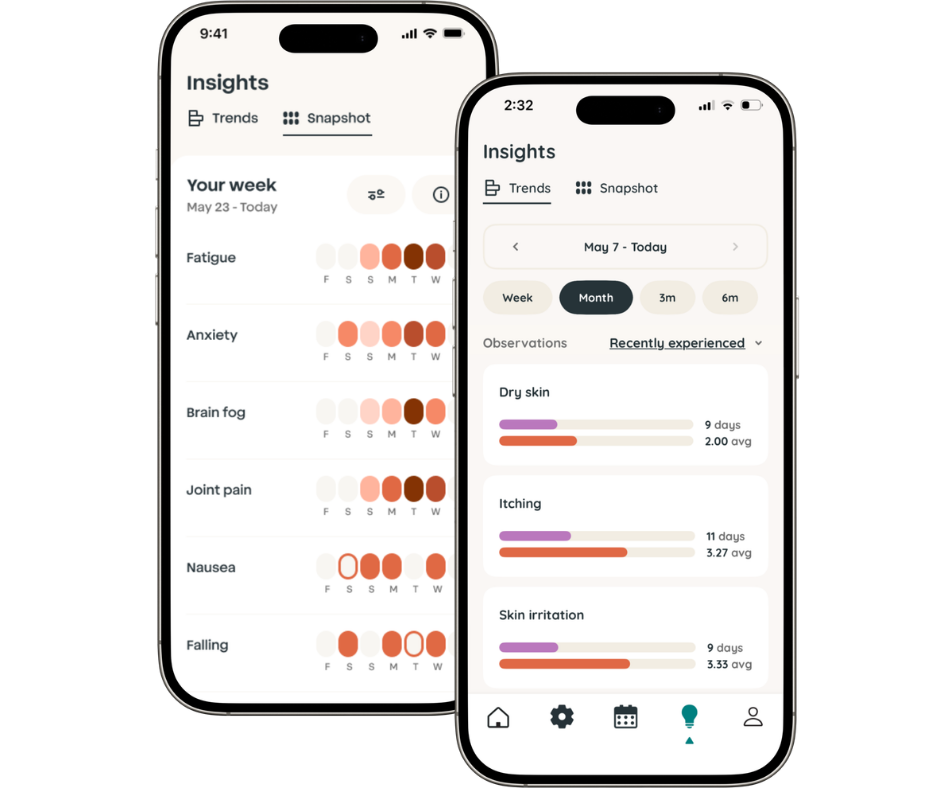
The Research
Usage patterns and the full burden of AD symptoms and flares
One month of tracking from 34 people with atopic dermatitis, with no usage requirements. Participants logged what they chose, when they chose. Of the flare days recorded, 94% never resulted in clinical care. Tracking clustered on Fridays and Saturdays and in the evenings, outside the hours when care is sought. Those days still involved treatment decisions. None of them entered a chart.
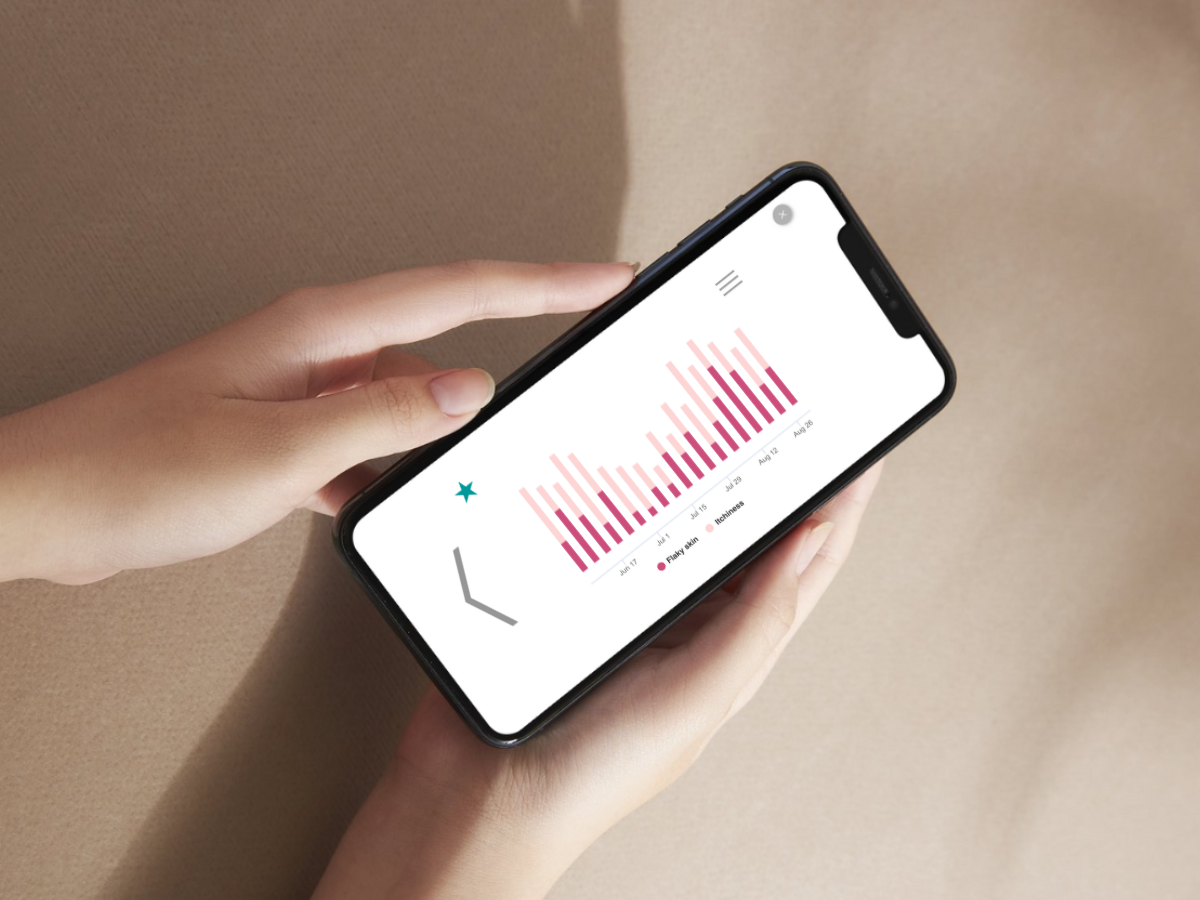
Sleep disturbance during flare
The same cohort described their sleep during flare and outside it, using preset tags and tags they created themselves. Markers of restorative sleep appeared more often outside flare. Markers of disruption, itching among them, appeared more often during it. Forty sleep characteristics surfaced in a month. Four of them did not exist until a participant needed one.
What we do
-
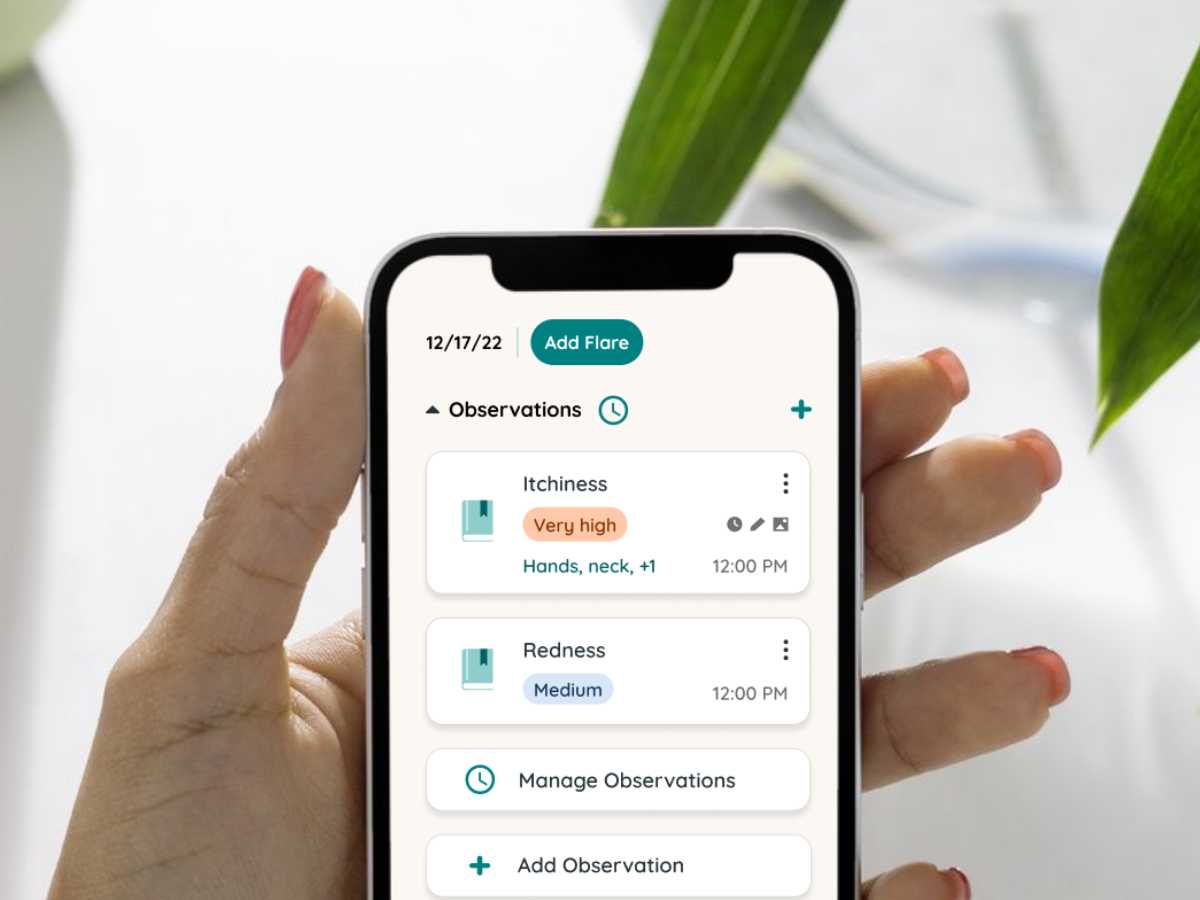
Our atopic dermatitis in-app experience was designed in collaboration with AD patients and caregivers. Participants are able to track symptoms, treatments, and flares, at a cadence and level of detail that matters to them, including severity scales, image capture, or contextual tagging.
-
Participants log flares in real time, including symptoms, severity, location, triggers and management actions. The platform can also prompt a participant when symptom severity exceeds their own baseline, which they confirm or dismiss.
-
Monthly check-ins administer validated PRO measures through the platform, making it easy for patients to complete regularly and that patient-defined outcomes are tied to a recognized benchmark.
-
Each program is scoped to your specific objectives, whether that is establishing burden, demonstrating therapy impact, reading an early signal quickly, or following a condition over years. Configuring the patient experience to match the objective is what makes the resulting dataset publishable and actionable rather than merely interesting.
-
Enrollment draws on Folia's existing platform population, Folia's clinician network, patient advocacy partners, and your own site network or patient lists.
-
Regular insights delivered on a monthly basis and at interim and final stages provide the evidence to support research objectives, a view into changes in the treatment or condition burden landscape, and the research-grade outcomes to support publication opportunities.
-
Get a complete picture of patient experience by combining day to day HROs captured in Folia studies with clinical data captured in claims, EMR, and medical devices through tokenization and integrations.
-
Folia Health is HIPAA and GDPR compliant. SOC 2. FDA 21 CFR Part 11.
Our Experience in Atopic Dermatitis
650+ people with atopic dermatitis already tracking on the Folia platform for their own personal use, providing a recruitment foundation for AD programs
Flare-definition portability demonstrated across atopic dermatitis, sickle cell disease and paroxysmal nocturnal hemoglobinuria
50,000+ patients across the Folia platform
80+ clinician collaborators across active programs
Participation that holds: monthly ePRO completion above 85%, post-study retention above 89%, average patient satisfaction 4.8 out of 5
The best pharma
teams use
home-reported outcomes.
Folia Health provides partners with longitudinal, patient-reported outcomes and high-quality structured symptom and treatment reporting. We’ve partnered with life sciences companies of all sizes, from small biotechs to top-10 pharma companies, to enhance their evidence strategy with our unique Home-Reported Outcomes (HROs) and flare diaries.
Fill out the form to schedule a time with our team. Let’s show the world the true impact of your therapy.