
Throughout the conversations we have with people living with complex chronic conditions, a few themes come up again and again.
The condition is not linear.
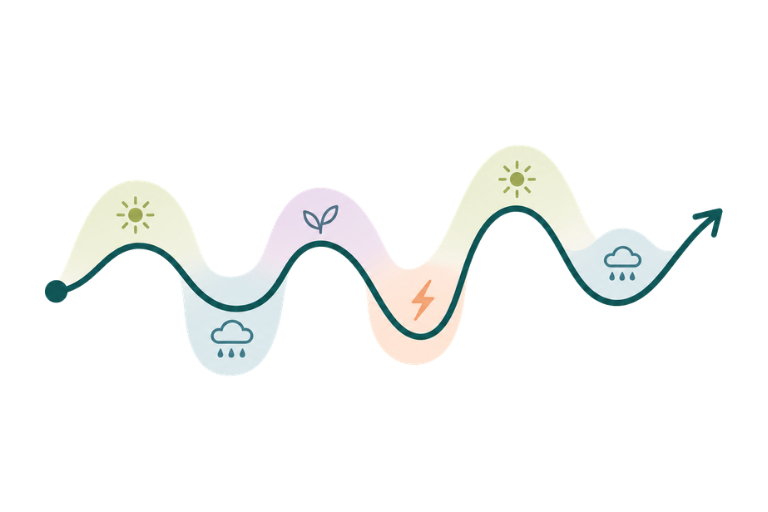
Regardless of how it started, there are ebbs and flows. People who have lived with their condition for a long time tend to learn their tells, the triggers that lead to a flare-up. People early in their journey are still trying to uncover them. When you seem to be feeling better, there is this little voice reminding you of the “what if?” What if I come out of remission? What if the transplant does not take? What if I fall? Everyone’s what-if statements change, but knowing that your condition is not a straight path forward can be taxing.
Telling your care team how you feel is a learning curve.
Many factors play into this. Maybe you simply don’t know what’s going on, which is more common than you think and a valid part of living with a chronic illness. Maybe you know what you want to say but can’t find the words, or 20 minutes with your specialist every six months isn’t enough time to cover every important part of your condition. Or maybe you’re still searching for a care team that listens to you and treats you as the most important member of that team.
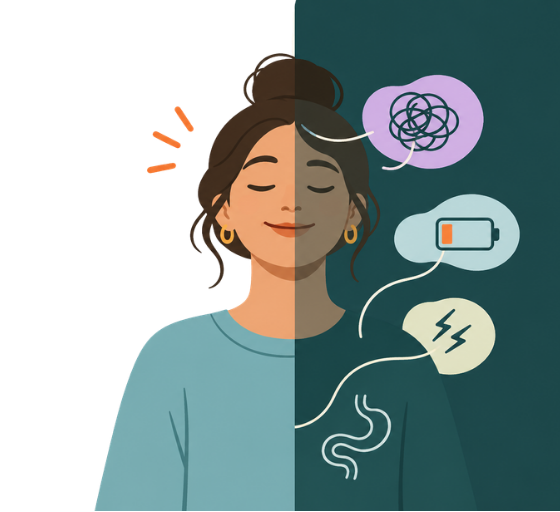
How you feel and what others see are not the same.
You may be up, walking, and talking, but the people around you don’t see the fatigue or the muscle weakness that keeps you from opening a water bottle. Some parts of living with a chronic illness are visible, but so many are not. You take the tests your physician orders, your bloodwork comes back healthy, and yet your body is telling a different story. This can leave you feeling misunderstood in your personal and professional life, and with your care team too.
This is by no means the full picture. It’s likely just one photo in an album of experiences. But if any of these themes resonated with you, tracking your health could help you build that album to share with family, friends, and clinicians.
There is so much unknown when you’re living with a chronic illness, and that’s one of the scariest parts. If you’re anything like me, the unknown, the gray area, is not your friend. It opens the door for your mental health to affect your chronic illness even more, and with that comes a mental burden that weighs on you constantly. So we look for tools that help us feel more in control of the unknown. Tracking your health on Folia is one of them.
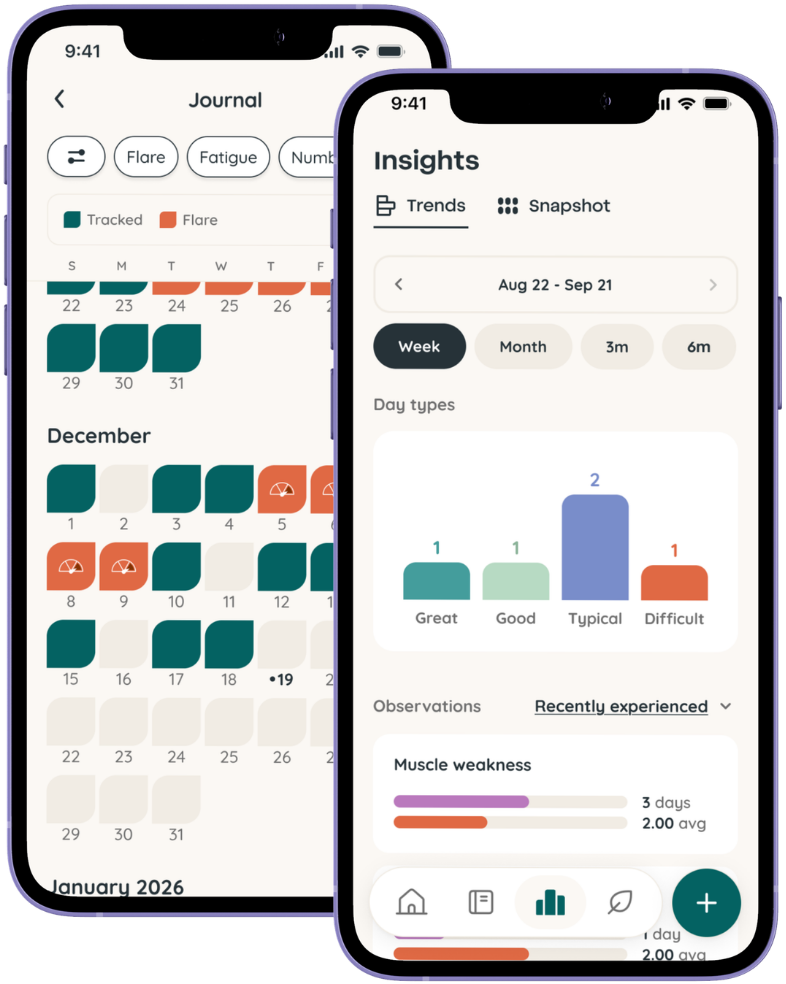
Like anything in life, when it comes to tracking your chronic illness, the more you put in, the more you get out. That alone can feel like a big barrier to entry. I get it. What do I track? What if I miss a day? Where do I even start? That’s where Folia’s dedicated user delight team comes in. We can help from day one, setting up the app and the observations and treatments you want to track. Before you know it, you’re building a source of truth about your chronic illness.
As you track things like fatigue, sleep, diet, your treatment plan, exercise, and really anything your heart desires, the app gives you clear visual insights into your health, surfacing trends you may never have noticed. On top of that, you finally have a place to offload the mental burden that adds yet another layer to an already complex condition. Map out life events like a move, a breakup, a new job, or other big moments that inevitably affect your overall well-being- the things we usually chalk up to “life” without acknowledging their impact. And when things get harder, and a flare-up comes on, track that too: how long it lasts and every symptom that comes with it.
Over time, you’ll start to connect the dots. Maybe you’ll notice that whenever you fly for more than four hours, a flare-up almost always follows. Look at your weeks in the calendar view and see how things change over time. Maybe this month you had only two flare days when last month you had ten. That’s a win worth celebrating.
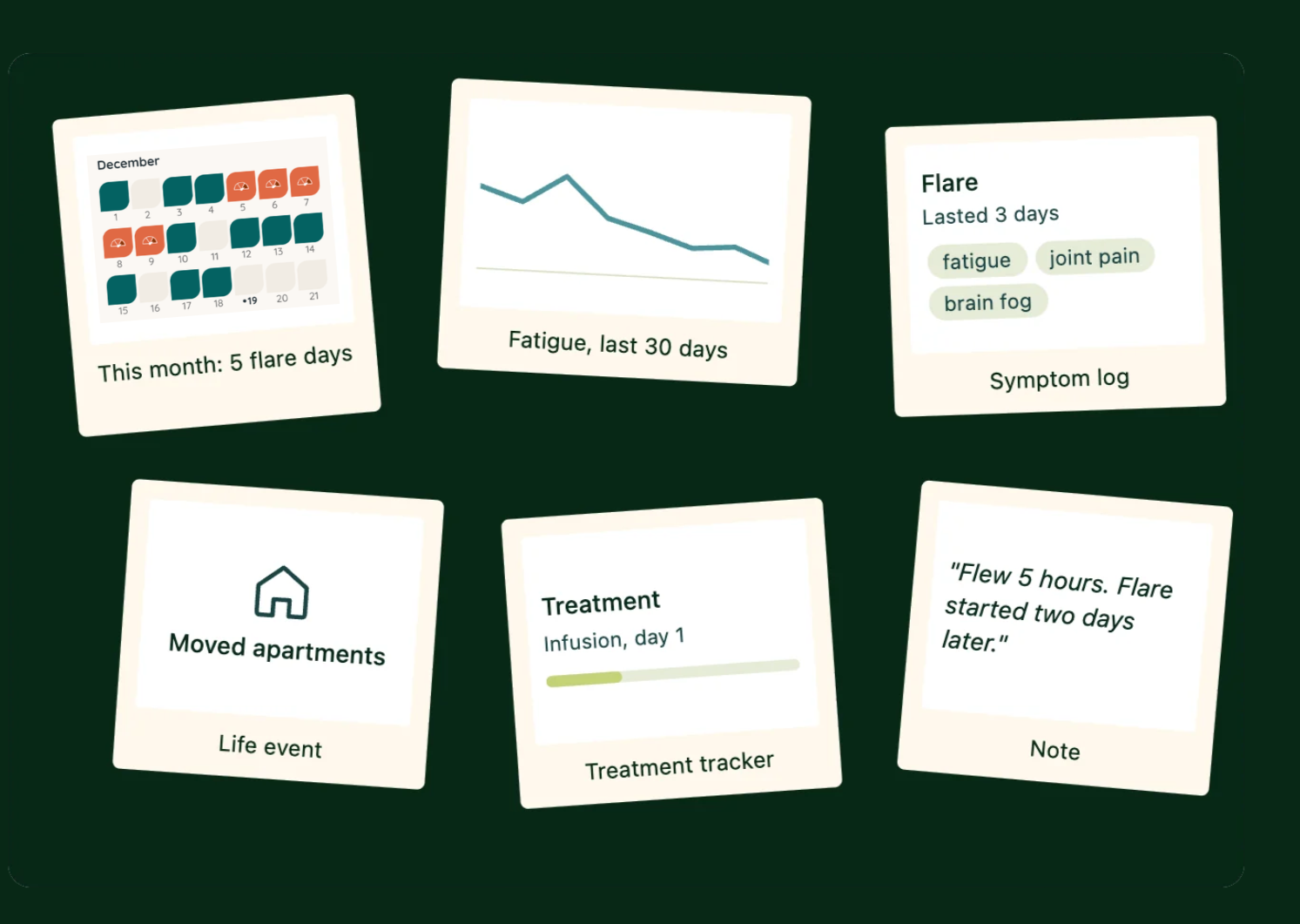
Everyone’s health journey is different and unique to them, but tracking can benefit anyone. The unanswered questions, the need for validation when you feel different from what your labs say, the need to mentally offload: these are shared experiences. One track at a time, we can start to put together the picture of what rare really looks like. And if you want, you can share what you track anonymously with the Folia team. You never have to, and your data is always yours. But by sharing your story, you may unlock a missing piece of someone else’s. Someone out there may need to hear that their infusion started wearing off around day 20 instead of day 27, or that their new medication is giving them night sweats. Your experiences, uniquely yours, may be exactly what someone else needs to hear right now.
Start tracking with Folia
Free for people living with rare and chronic conditions.
